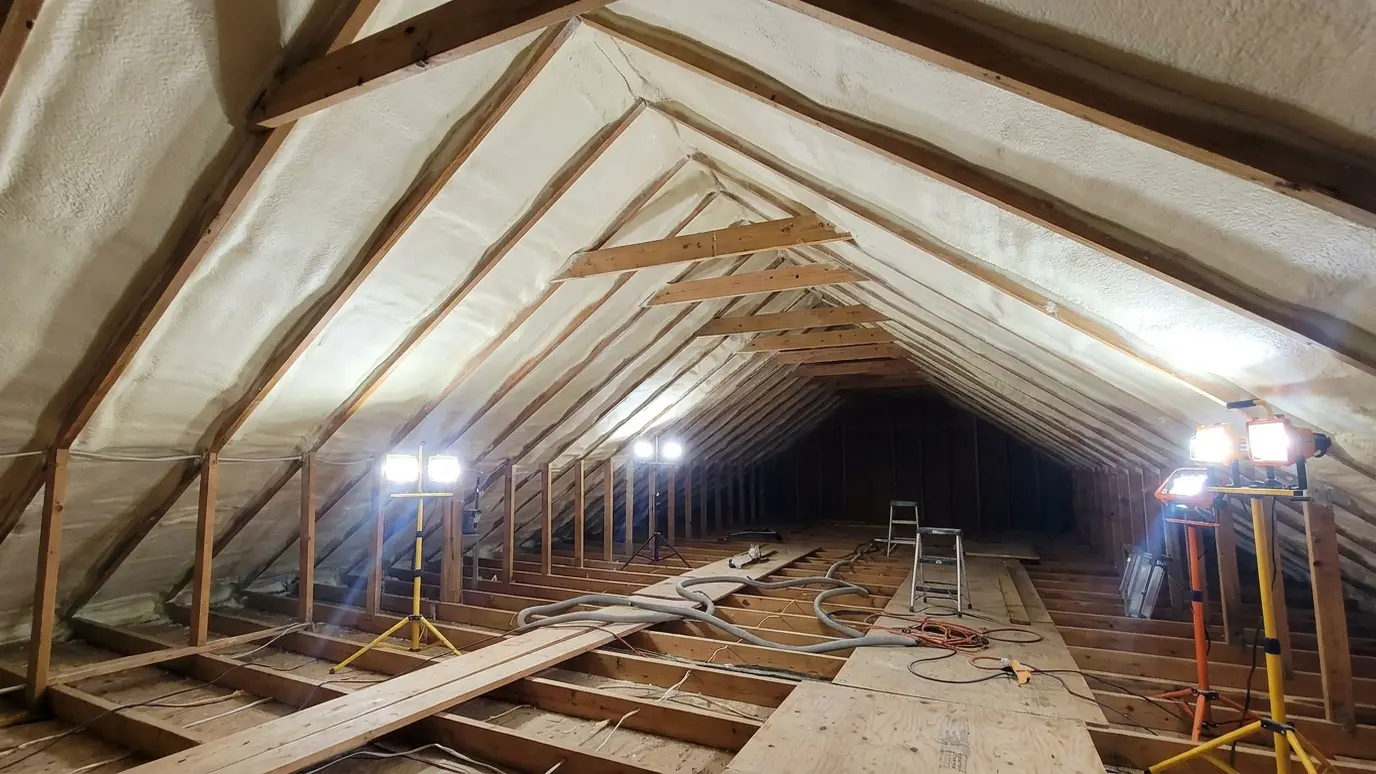
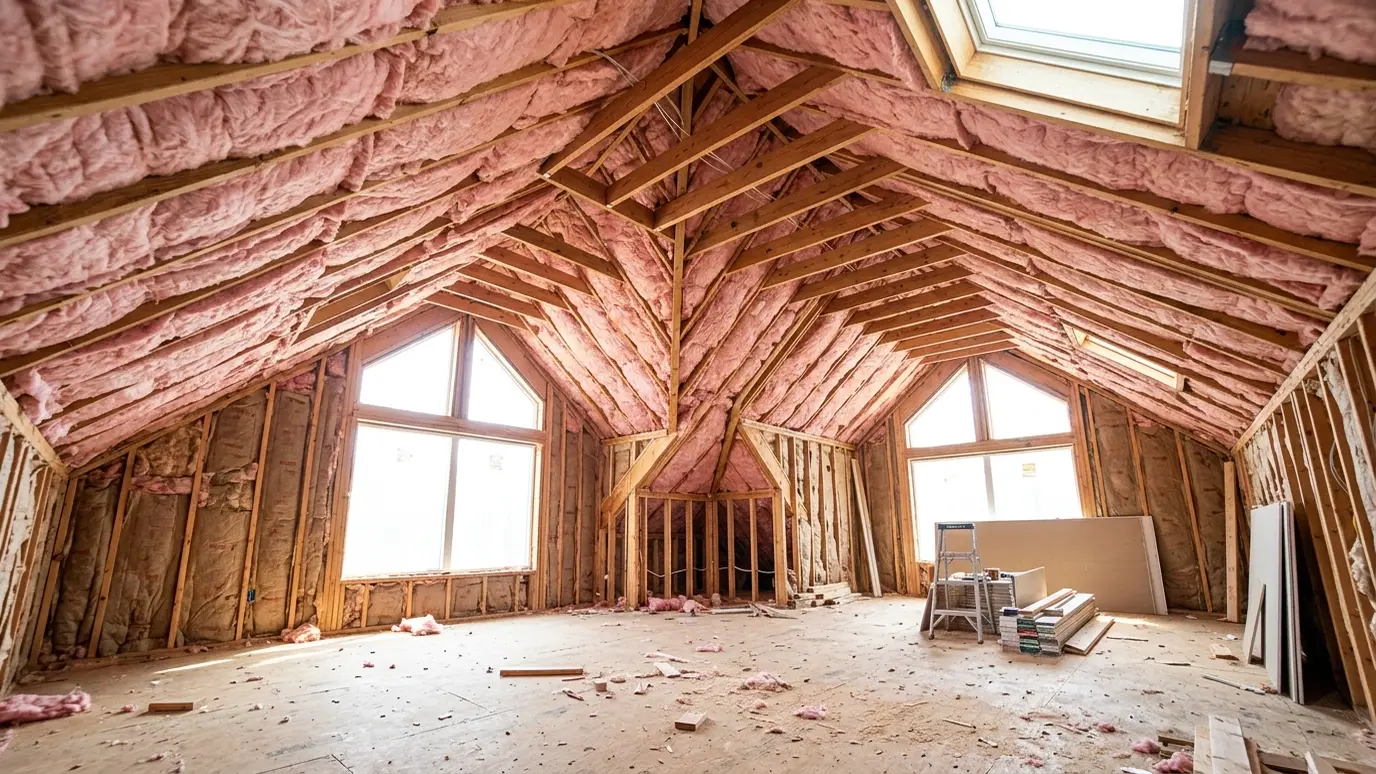
Spray foam on the underside of the roof deck, turning the attic into a conditioned space that protects ducts and equipment.
Many houses have the HVAC system and ducts in the attic, where summer temperatures can climb far above the outside air. Insulating the roof deck instead of the attic floor brings that space inside the thermal envelope, so equipment and ducts live in a milder environment.
We spray foam to the underside of the roof deck and gables, seal around chimney chases and eaves, and close the soffit and ridge vents so no outside air enters. Because the details are specific, we review code requirements, ignition barrier needs and moisture conditions for your roof before we begin.
Ducts in a hot attic lose heat and cooling before air reaches the rooms. A conditioned attic reduces that loss and often makes rooms more even.
Closed-cell foam adds stiffness and resists moisture, and open-cell foam is soft and expands to fill every gap. The choice depends on the roof, the budget and local code for the roof deck.
Spray foam in an attic generally needs an ignition barrier or thermal barrier where the space is accessible. We review the requirement and install the right coating.
Foam changes how the roof deck dries. We check for leaks first and talk about shingle coverage terms and moisture concerns with your roofer before we spray.
Drag the handle to compare.
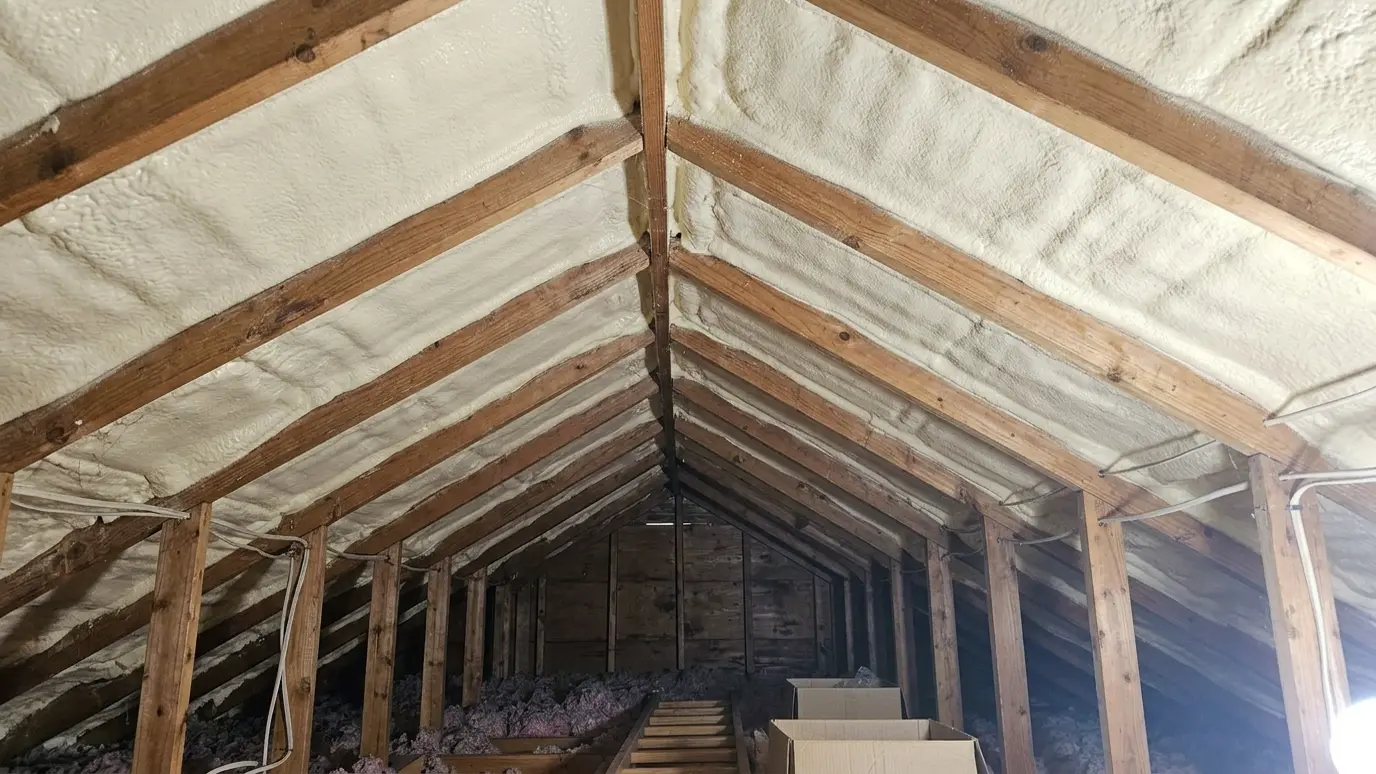
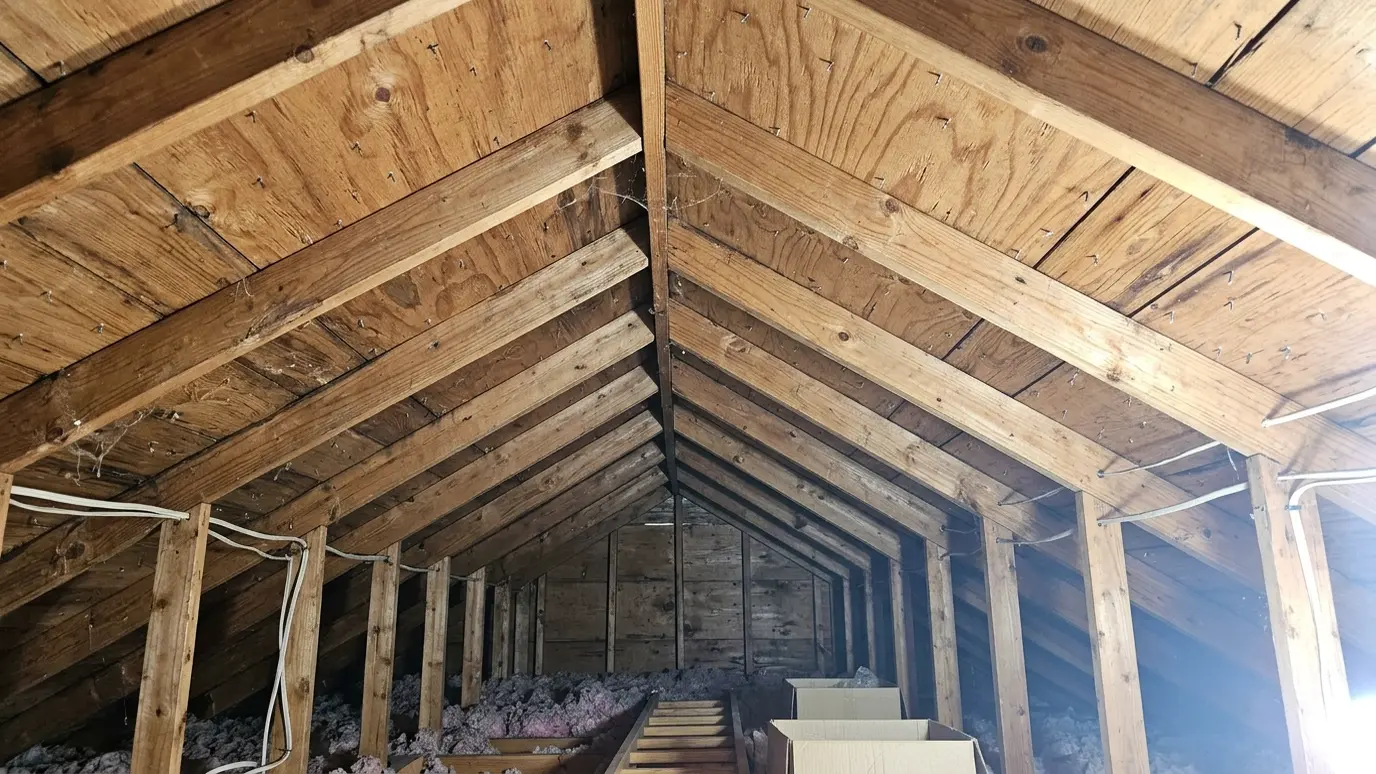 BeforeAfter
Ducts and air handler in milder air.
Matched to your roof.
Installed where required.
Leaks fixed before foam.
Soffit and ridge vents sealed.
Overspray protected and removed.
Every topic has its own page with what to expect and how we approach it.
 Project situationHot and Cold RoomsOne room is always too warm and another is always too cold. Here is why it happens and…Learn more
 Project situationHigh Energy BillsWhen bills climb and the house still does not feel right, the building is often the reason. Here…Learn more
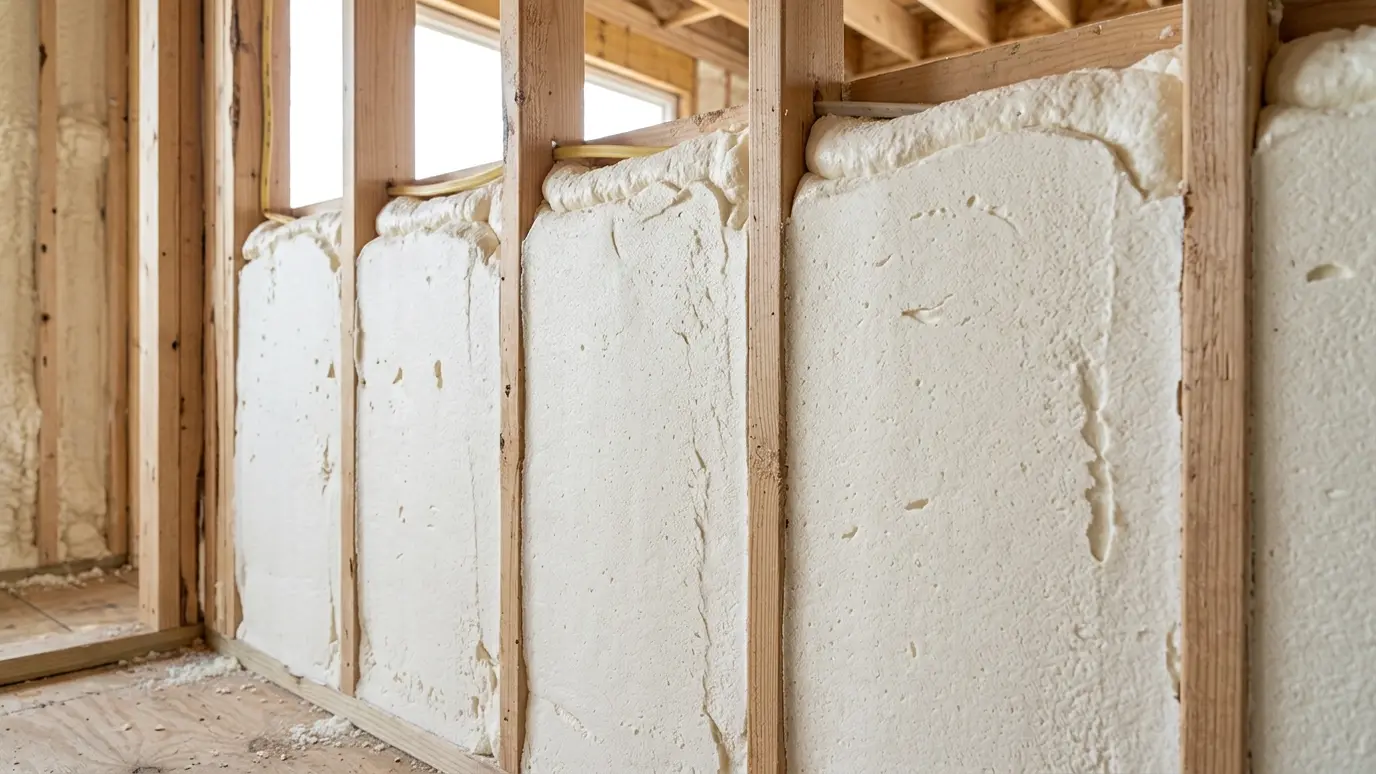 Material guideSpray FoamOpen-cell and closed-cell foam insulate and seal in one step. Here is how to choose and what to…Learn more
Enter the area and the thickness to see board feet of foam and the approximate R-value for open-cell and closed-cell.
You tell us what is going on, which rooms bother you and what you hope to change, and we set a time that fits your day.
We walk the attic, walls, crawl space and equipment, measure depths and use thermal imaging when it helps.
We protect the house, seal air leaks, place baffles and fix small problems so the insulation can do its job.
Loose-fill, batts, foam or board goes in to the planned depth, with clean edges and clear markers.
We measure the result, take photos and test air leakage when the scope includes it.
We walk the finished work with you, answer questions and leave the site clean.
It often fits homes with attic HVAC equipment and complex rooflines. We review the roof, the equipment and the local rules before recommending it.
Some shingle makers have conditions. We recommend you check your shingle manufacturer and talk to your roofer before foaming.
Leaks are harder to spot under foam, so we look hard for existing leaks and repair them first.
Most attics take one to two days, plus time for the ignition barrier to dry.
We ask you to leave during application and for the cure time the manufacturer lists. We tell you the exact timeline before the work starts.
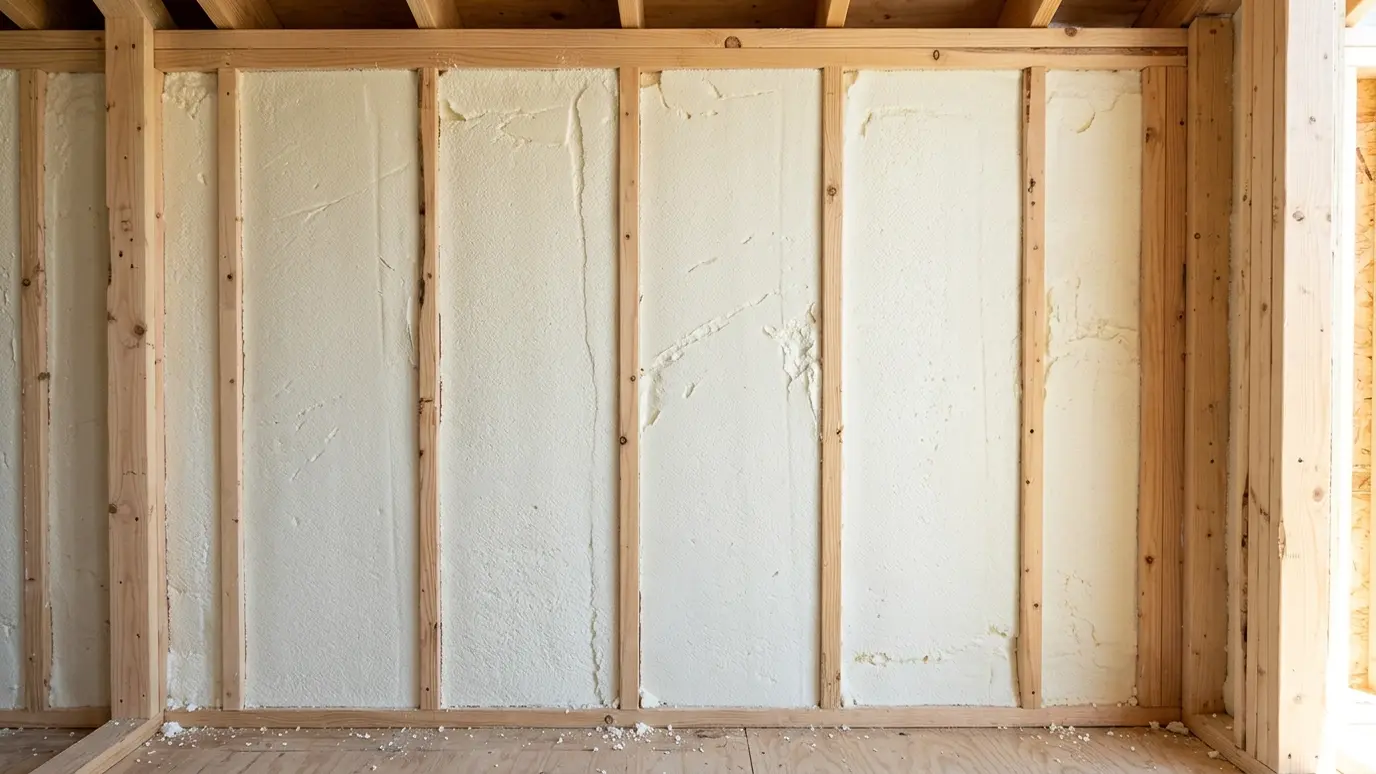 Closed-Cell Spray FoamA dense, rigid foam with high R-value per inch that also resists moisture, ideal for tight spaces, rim…Explore
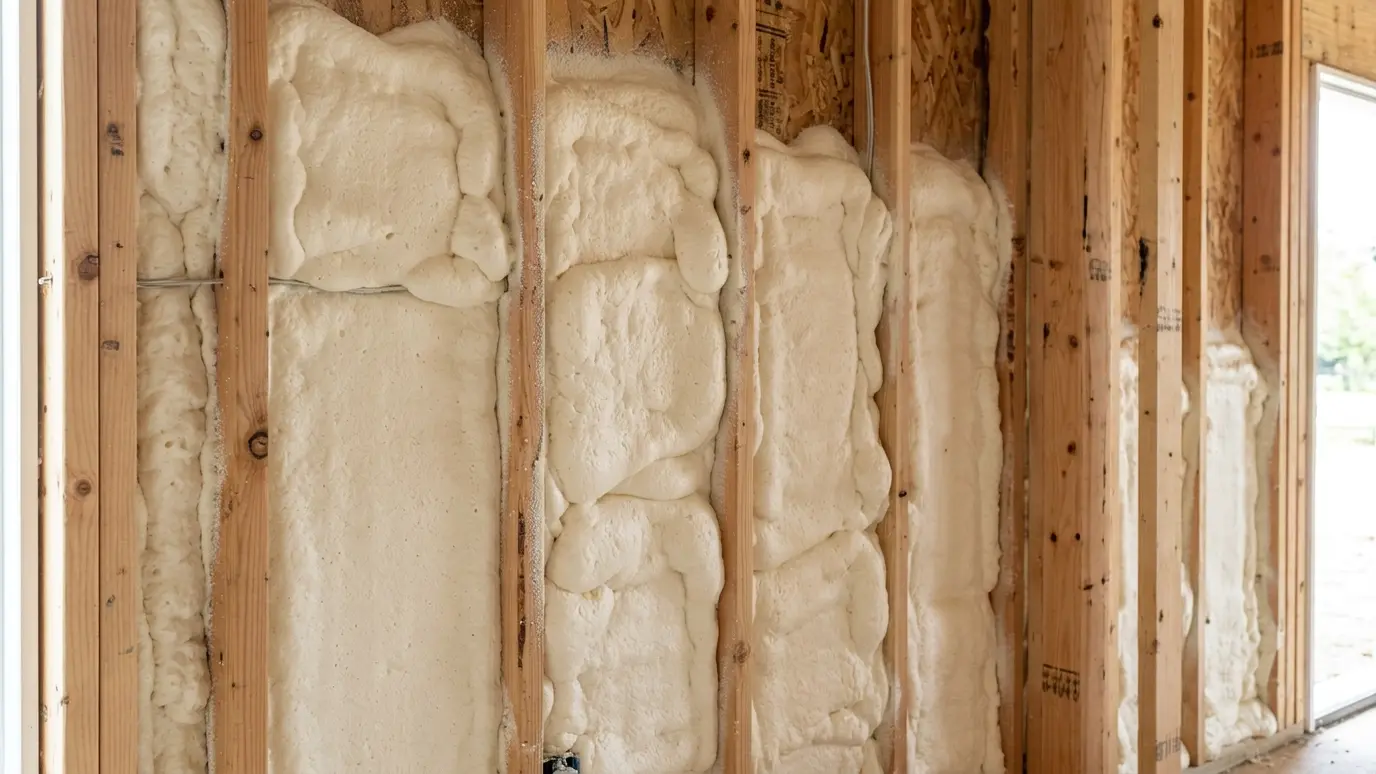 Open-Cell Spray FoamA soft, expanding foam that fills every nook, seals air leaks and dampens sound in walls, ceilings and…Explore
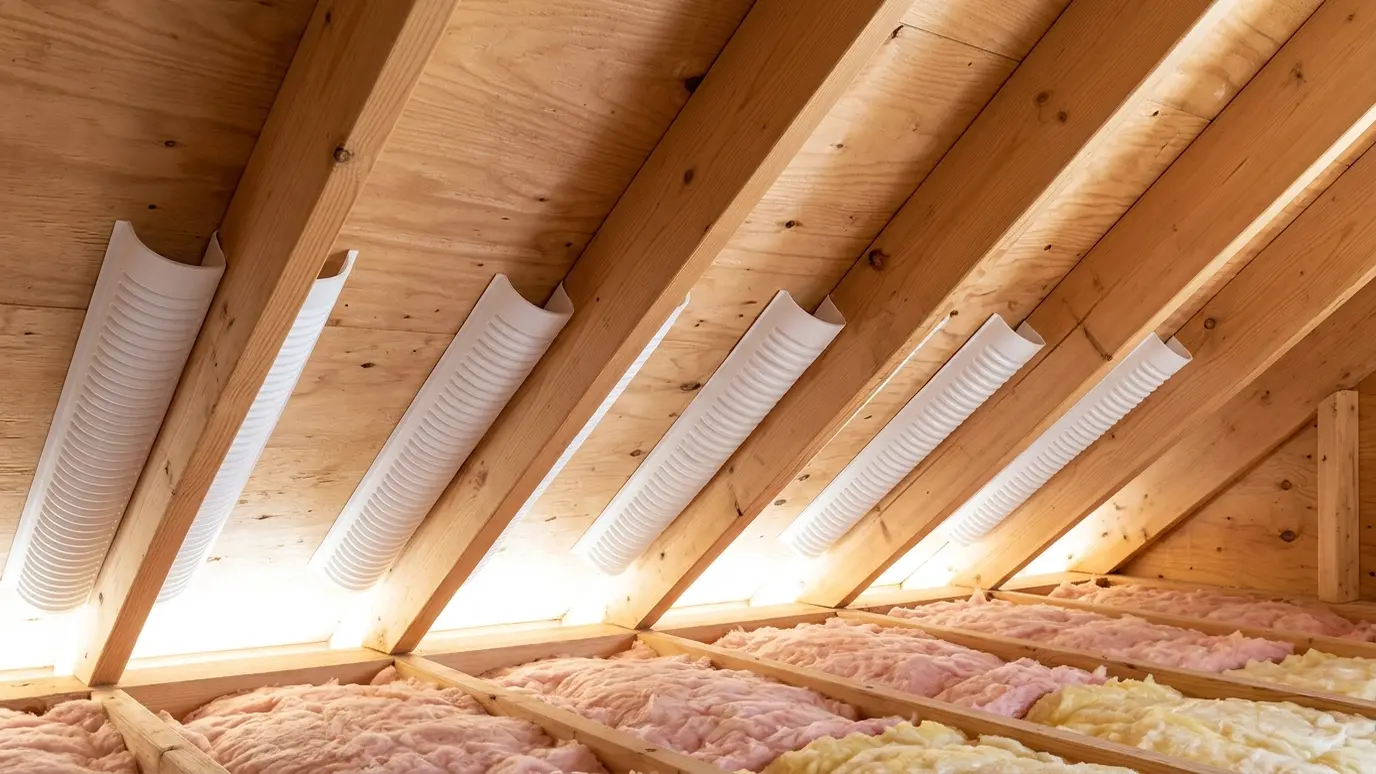 Attic Ventilation and BafflesBalanced airflow from the eaves to the ridge, so the roof deck stays dry and cooler and your…Explore
 Cathedral and Vaulted CeilingsSloped ceilings insulated with the right depth, airflow and air barrier, so tall rooms stay comfortable and the…Explore
Tell us about the project and we will call you back to talk it through.
Or call (615) 357-7797 to talk now.