Look and measure
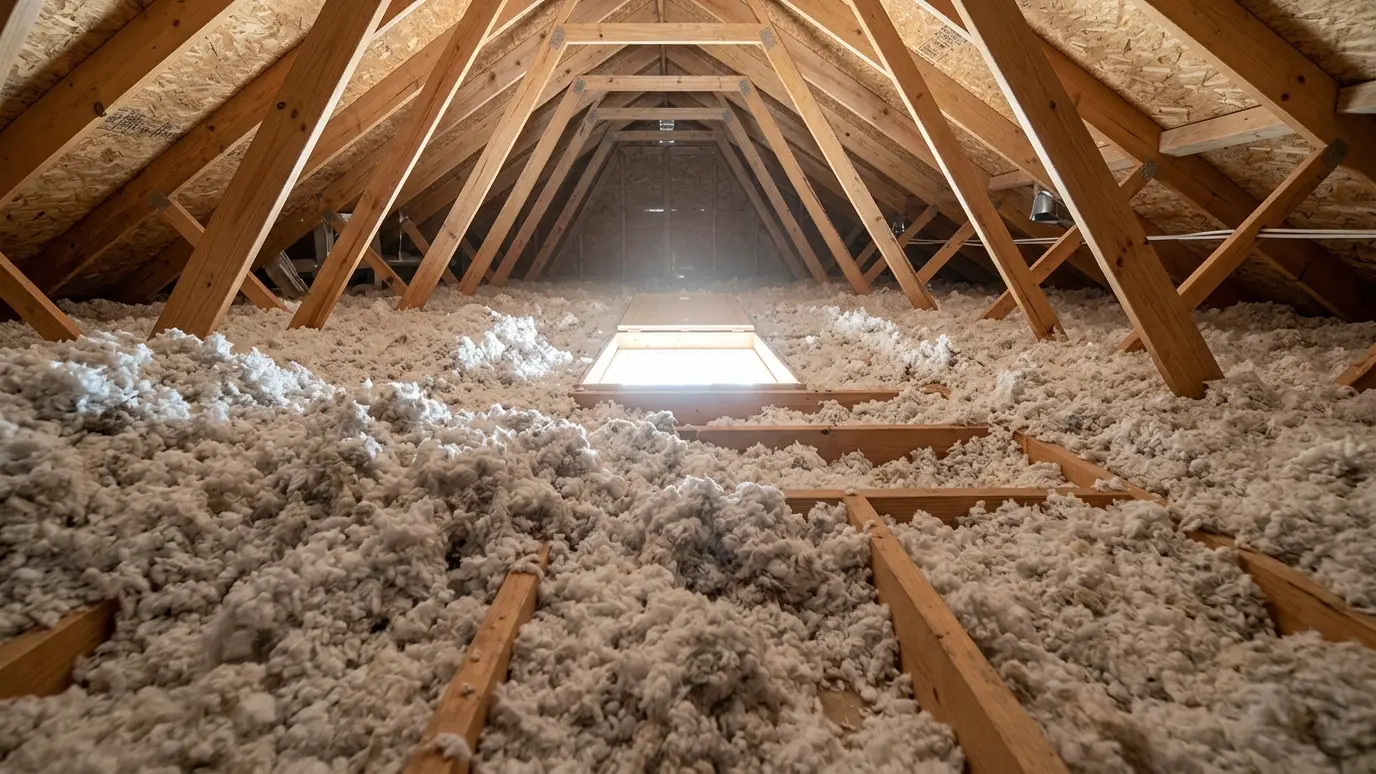
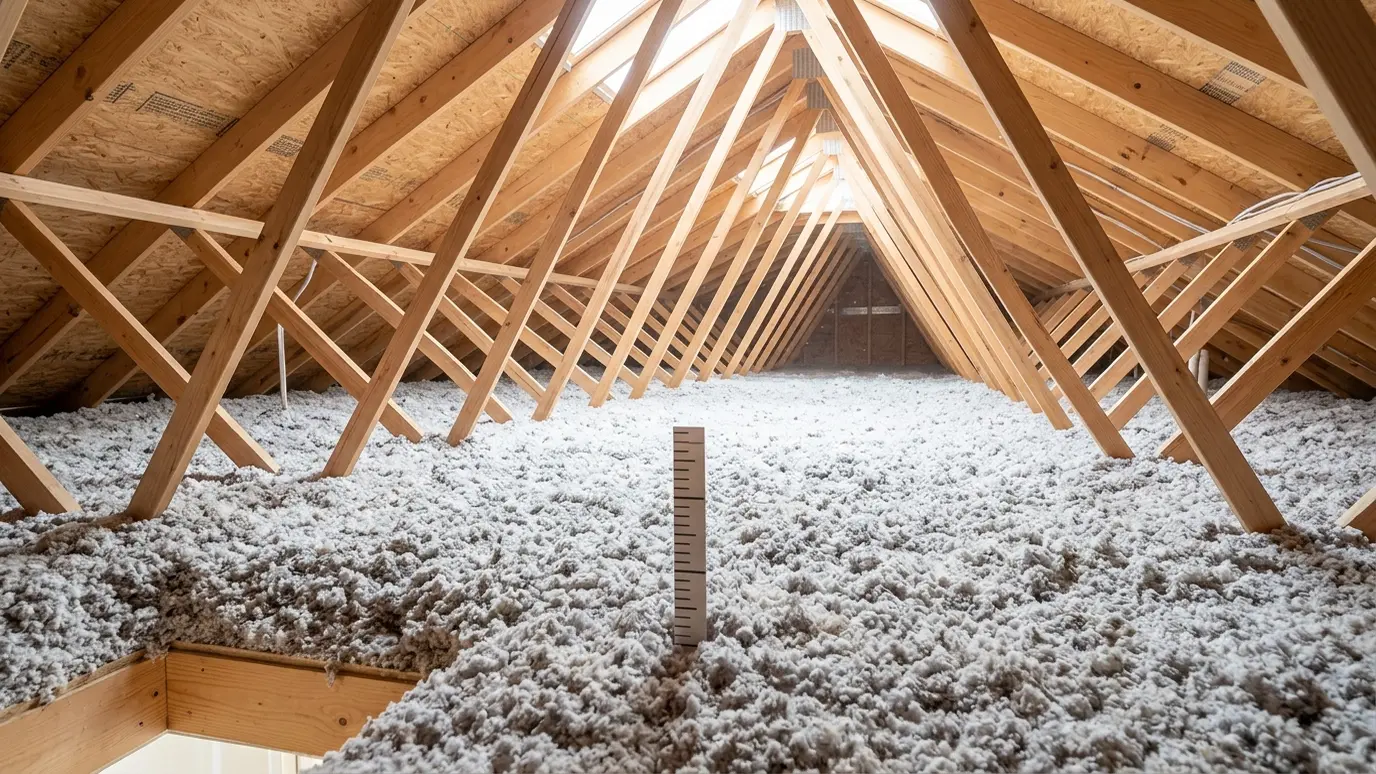
With a flashlight and a ruler, check the depth in several spots. If you can see the tops of the joists, the layer is thin. Uneven depth and bare patches matter too.
Take photos so you can compare with a quote.
Know the type
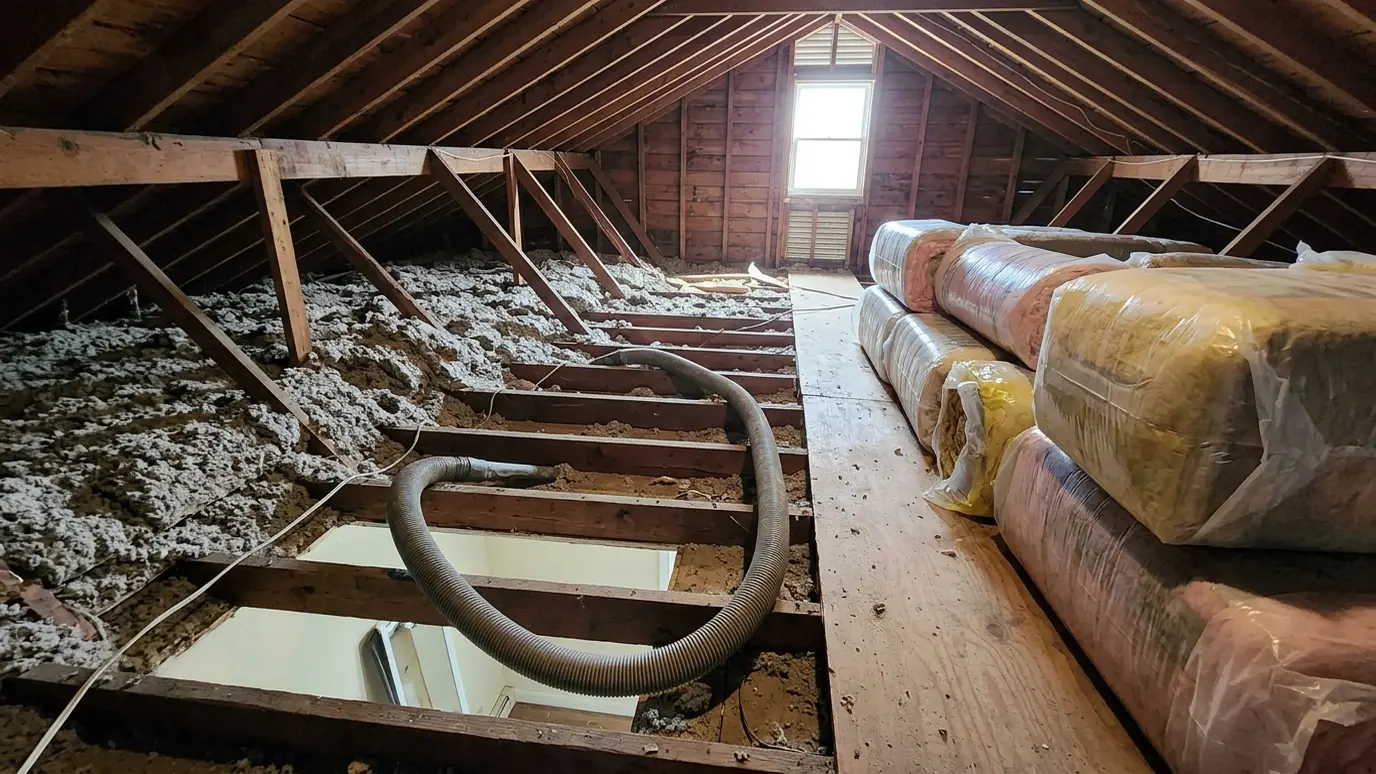
Fluffy pink or yellow rolls are fiberglass. Gray, dense, paper-like fiber is cellulose. Pebbles may be vermiculite, which should be left alone and tested.
The type affects how much depth equals the same R-value.
Check the condition
Look for flattened, wet, stained or dirty areas, droppings and chewed spots. Those areas do little and may need removal.
Compressed insulation under stored boxes is common.
Look for leaks and blockages
Dark streaks on insulation show where air moves. Insulation pushed against the soffit can block airflow.
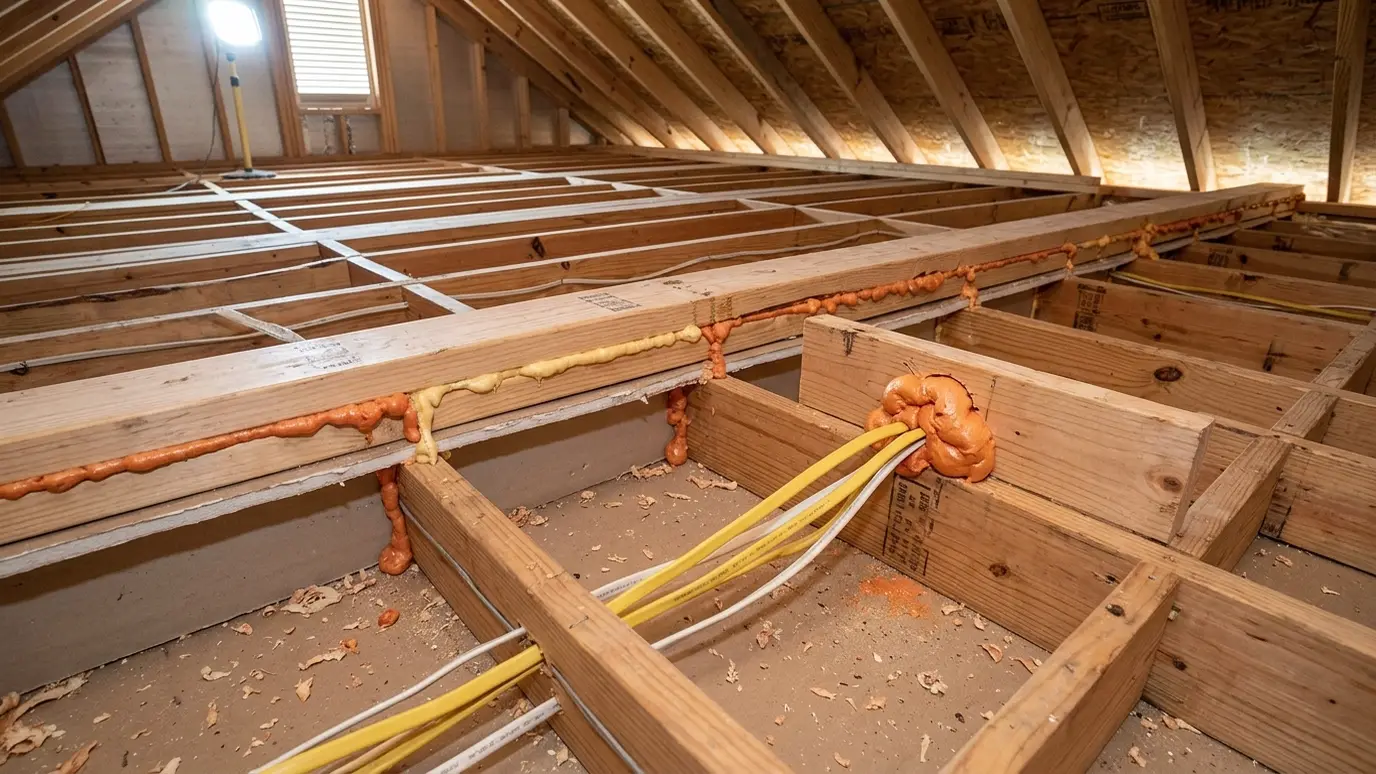
Baffles and sealing often come before new material.
Decide on adding or replacing
If the insulation is dry, clean and thin, adding loose-fill on top is common. If it is wet, moldy or contaminated, replacement is wiser.
An inspection can settle the question quickly.
Protect the hatch and flues
Insulate and gasket the hatch, and keep a clearance around flues and certain light fixtures. These details prevent leaks and hazards.
A tidy finish includes walkway boards where you need access.
If you can see the joists, your attic probably needs more, and air sealing should come first.