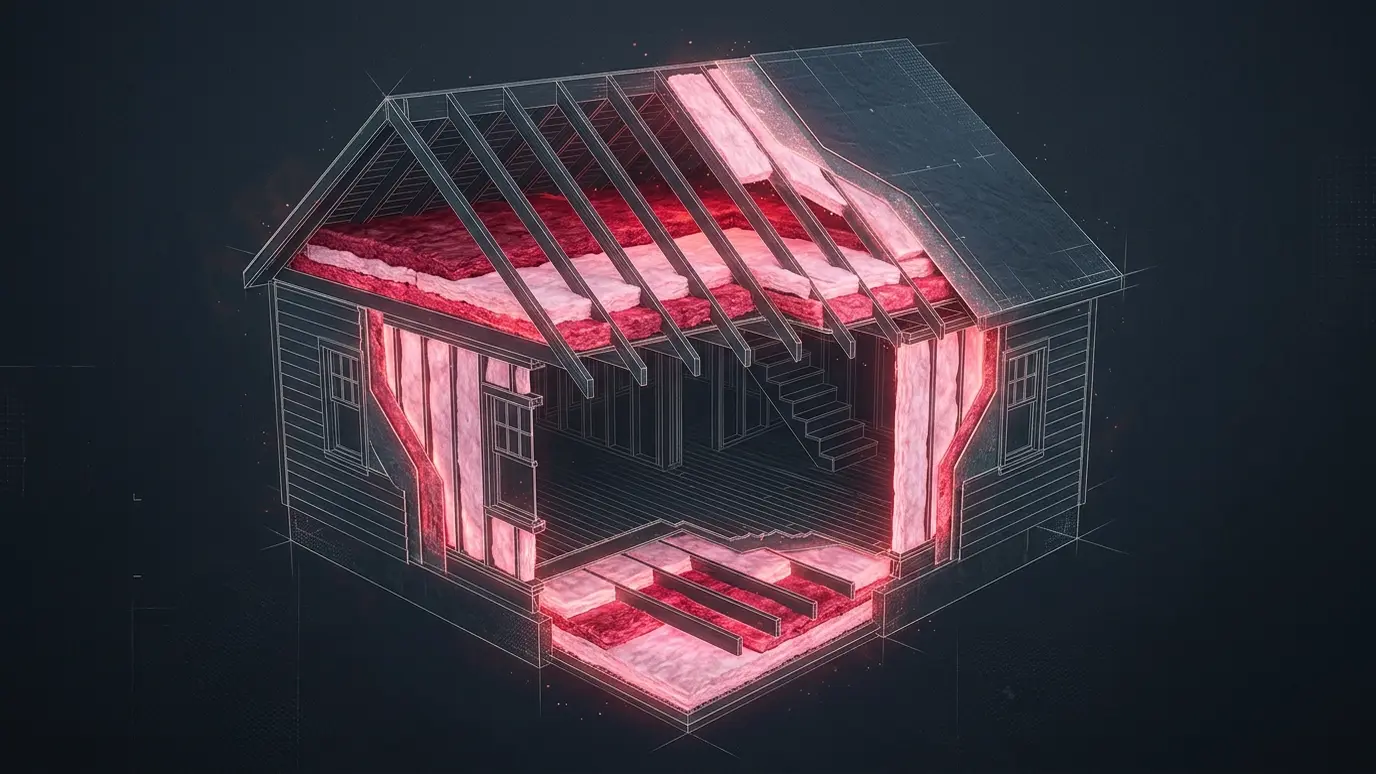
Balanced airflow from the eaves to the ridge, so the roof deck stays dry and cooler and your insulation can do its job.
A vented attic works like a chimney: cool air enters at the soffits, warms as it moves up the underside of the roof and exits at the ridge or high vents. That flow carries away summer heat and winter moisture. When it is blocked by insulation or by missing vents, the roof deck can trap damp air and age early.
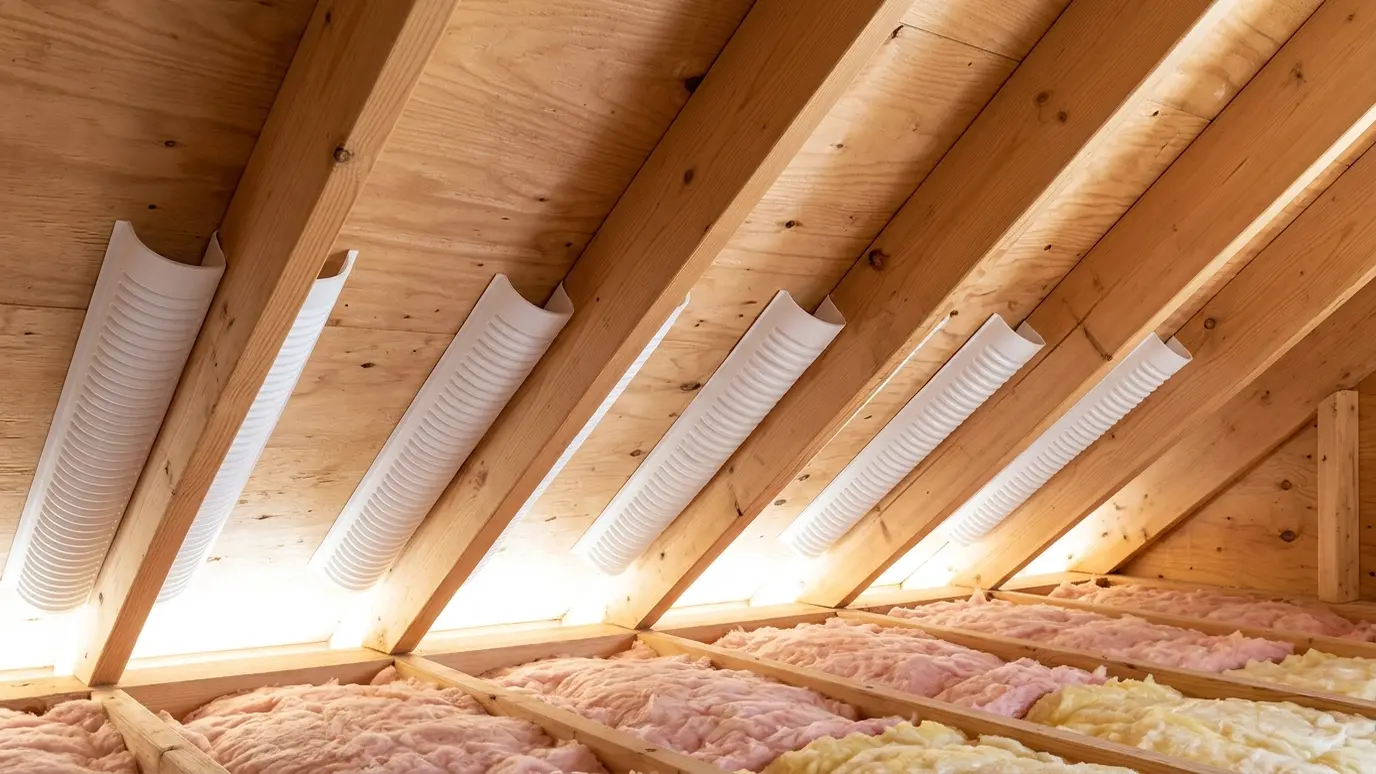
We check the intake and exhaust, measure how much opening you really have, and bring them into balance. Rafter baffles hold insulation back from the soffit so air can flow, and new ridge or soffit vents go in where the attic is short on opening.
More exhaust than intake can pull conditioned air from the house. We aim for a balanced system and avoid mixing different types of exhaust vents on the same roof.
A baffle is a thin channel at each rafter bay that keeps insulation away from the soffit. Without baffles, new loose-fill often blocks the very vents that keep the roof healthy.
Moist air should leave the house, not end up in the attic. We check that fans are ducted to the outside with insulated, sealed duct, which prevents frost and stains on the roof deck.
Some roofs are designed without vents, as with spray-foamed roof decks. We explain which approach fits yours before we change anything.
Drag the handle to compare.
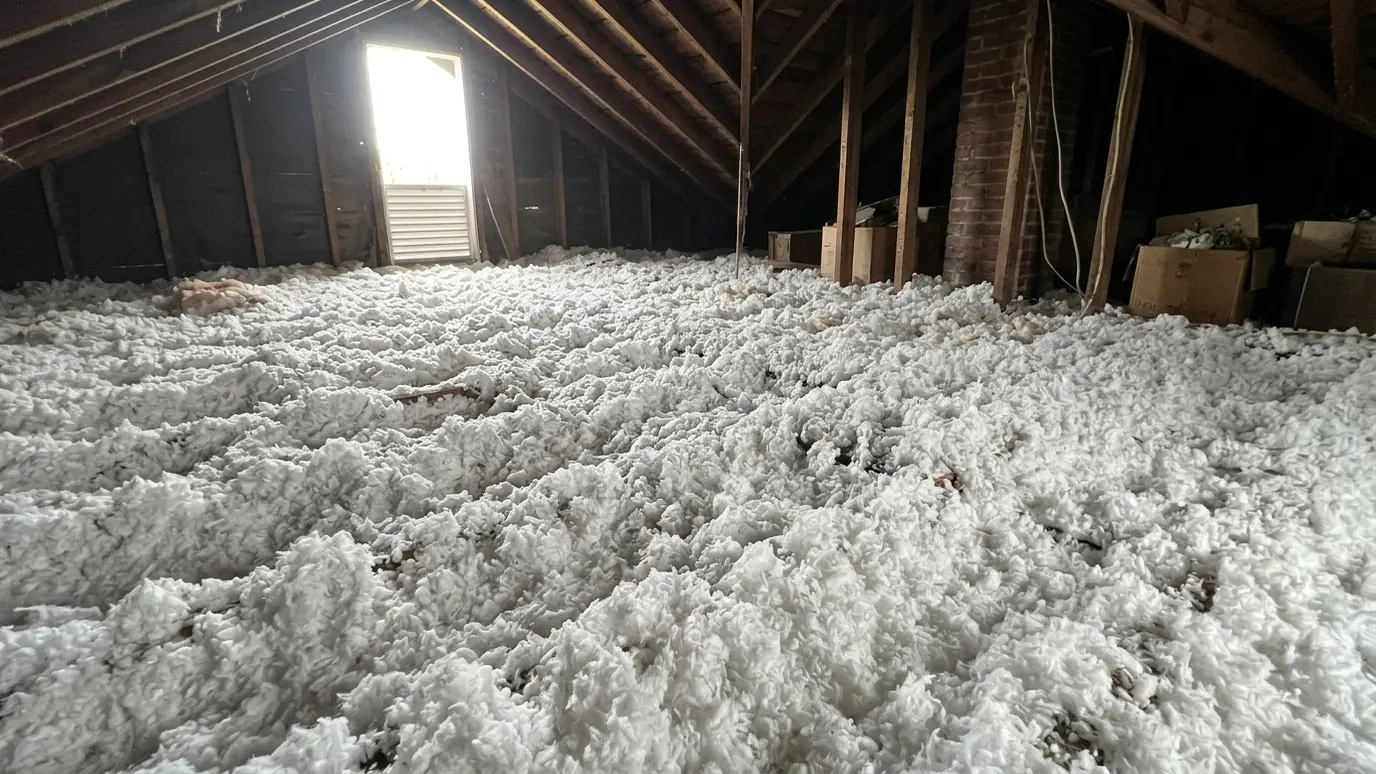
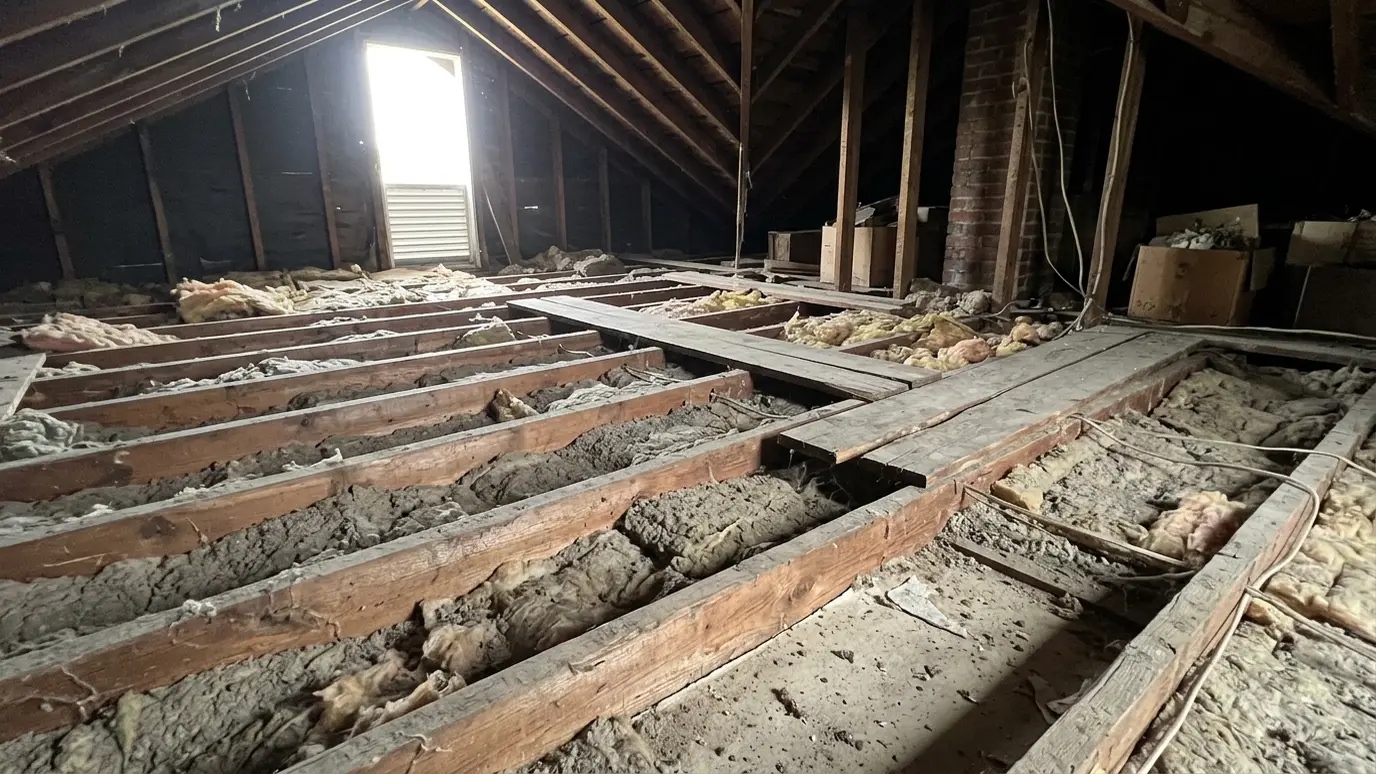 BeforeAfter
Intake and exhaust measured.
Airways held open above the insulation.
Damp air moved out of the attic.
Fans connected to the outside.
Intake and exhaust matched.
A drier, cooler deck.
Every topic has its own page with what to expect and how we approach it.
 Project situationHot and Cold RoomsOne room is always too warm and another is always too cold. Here is why it happens and…Learn more
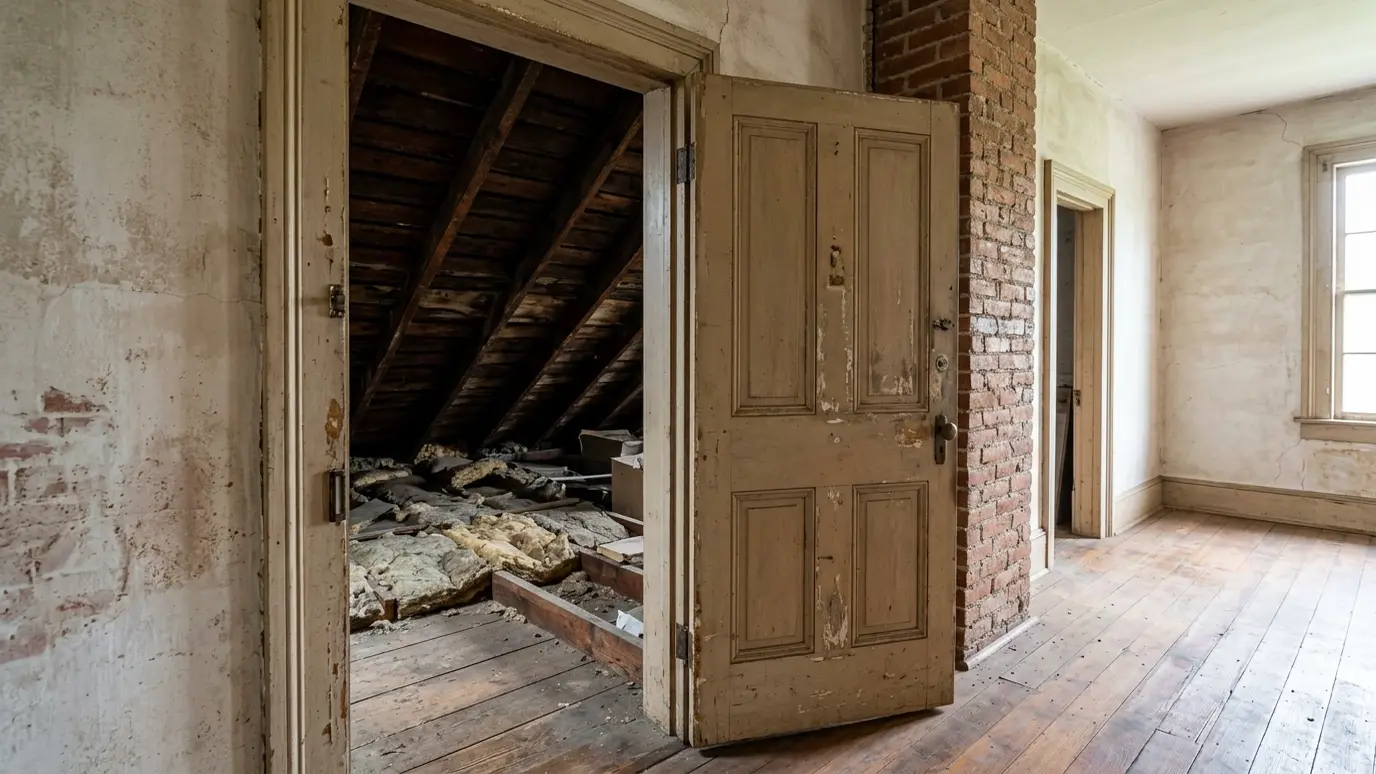 Project situationOlder HomesOlder houses have charm and hidden challenges, from empty walls to unsealed attics. Here is how to improve…Learn more
 Project situationHigh Energy BillsWhen bills climb and the house still does not feel right, the building is often the reason. Here…Learn more
Enter the attic size, the material and the depth you have now to see how much to add to reach your target.
You tell us what is going on, which rooms bother you and what you hope to change, and we set a time that fits your day.
We walk the attic, walls, crawl space and equipment, measure depths and use thermal imaging when it helps.
We protect the house, seal air leaks, place baffles and fix small problems so the insulation can do its job.
Loose-fill, batts, foam or board goes in to the planned depth, with clean edges and clear markers.
We measure the result, take photos and test air leakage when the scope includes it.
We walk the finished work with you, answer questions and leave the site clean.
Not always, but baffles are almost always needed. We check the existing openings and add vents only where the attic is short.
A continuous ridge vent paired with open soffits gives smooth, even airflow. Box vents work, but mixing styles can short-circuit the system.
It helps the attic shed heat and protects the roof. The largest comfort gains still come from air sealing and insulation.
It can help, but we also look for the source, such as a bath fan venting into the attic or air leaks from the house.
Yes. Paint, old insulation and missing baffles block soffits in many homes, and clearing them is a quick, high-value fix.
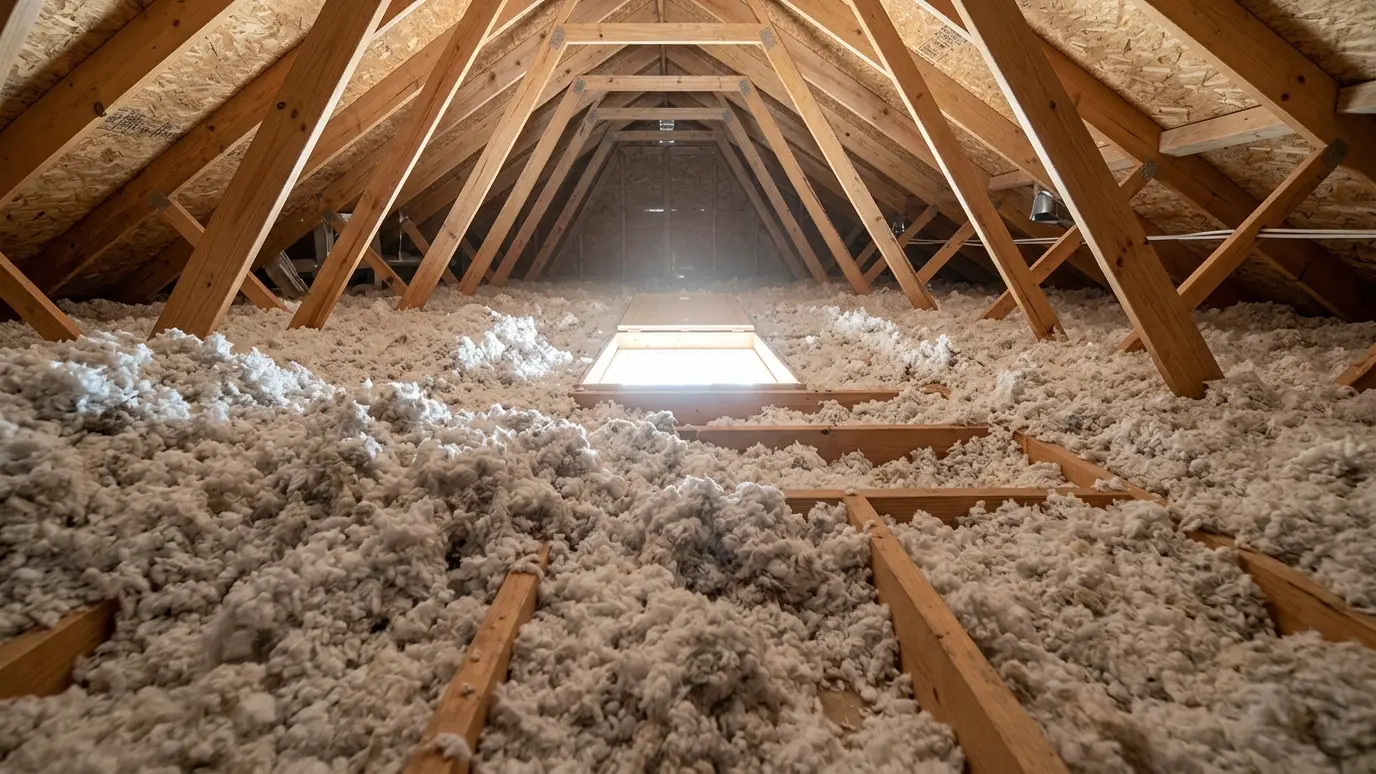 Blown-In Attic InsulationA deep, even blanket of loose-fill insulation over your ceiling, installed to a measured depth so every room…Explore
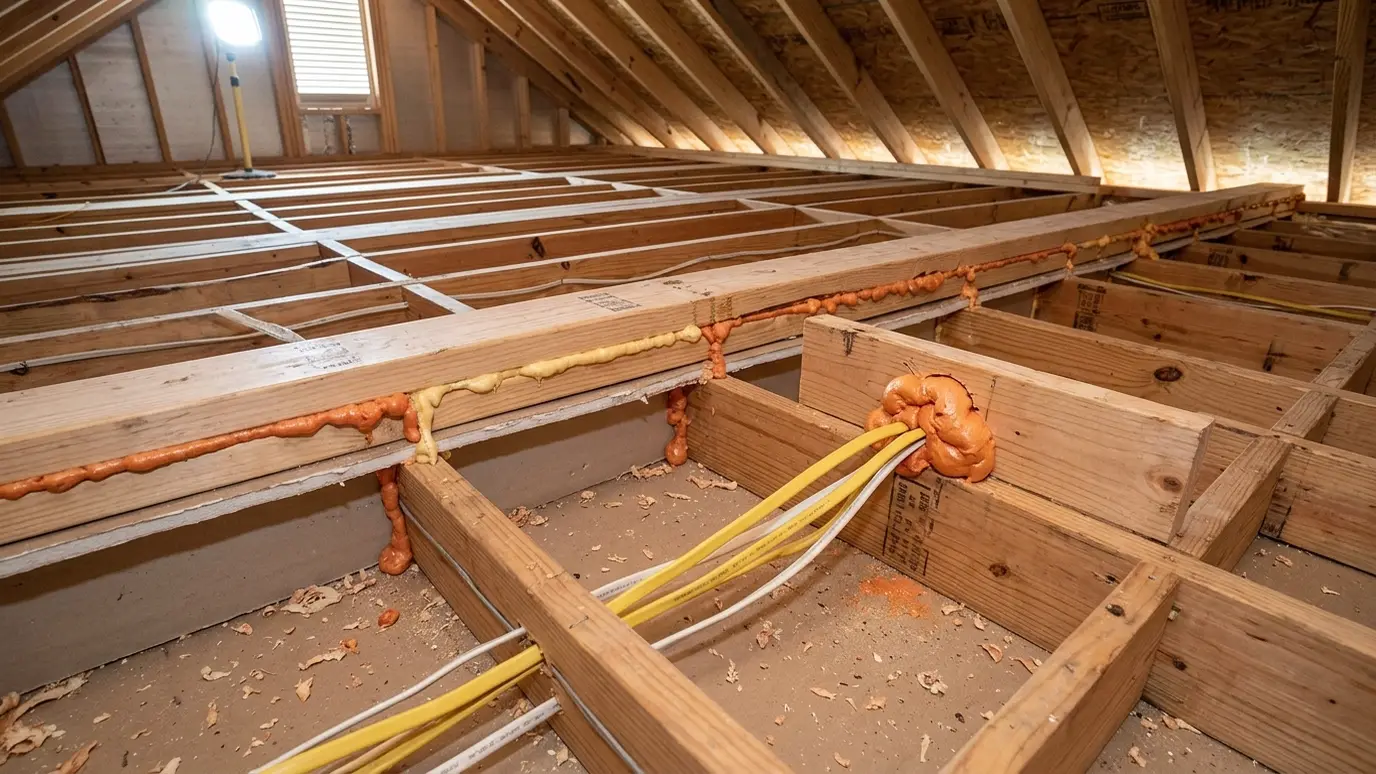 Attic Air SealingThe hidden leaks between your living space and the attic, found and sealed so conditioned air stays inside.Explore
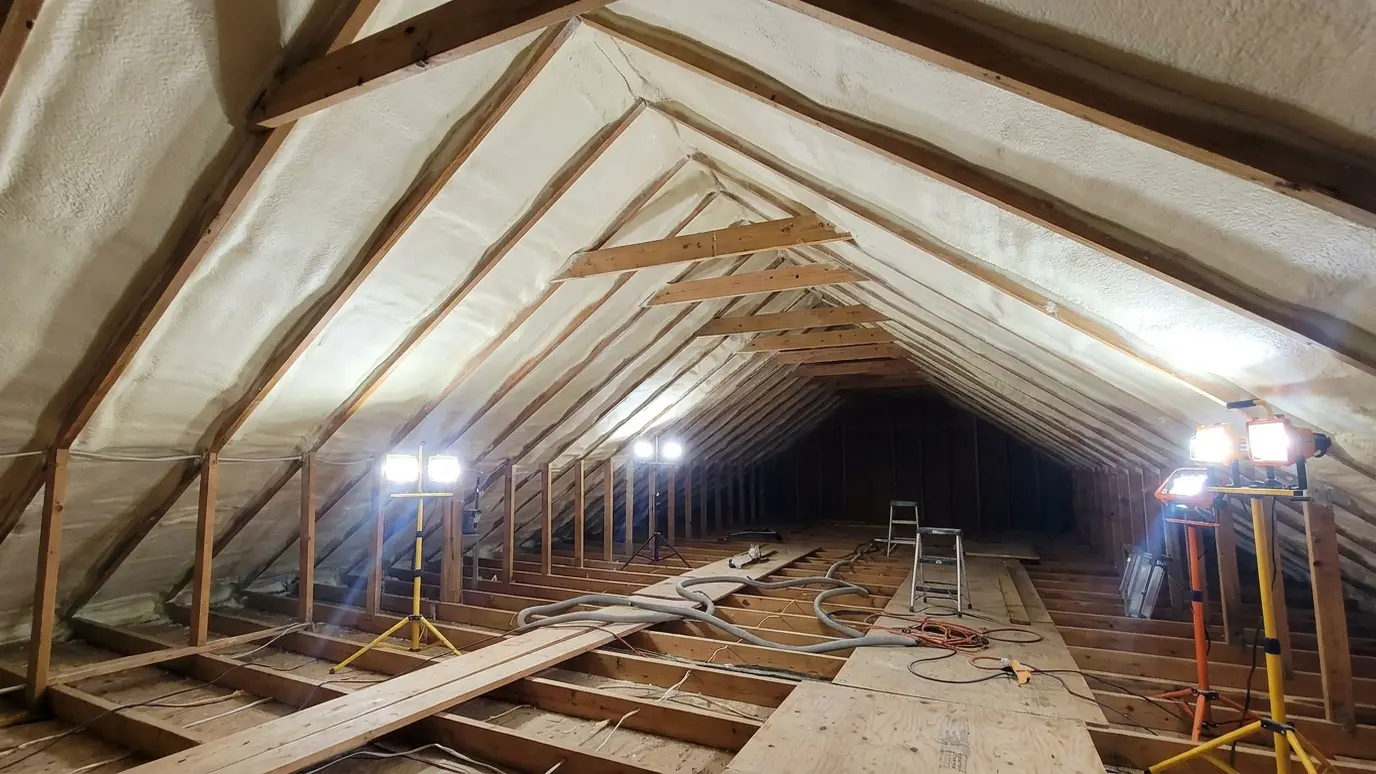 Unvented Attic Spray FoamSpray foam on the underside of the roof deck, turning the attic into a conditioned space that protects…Explore
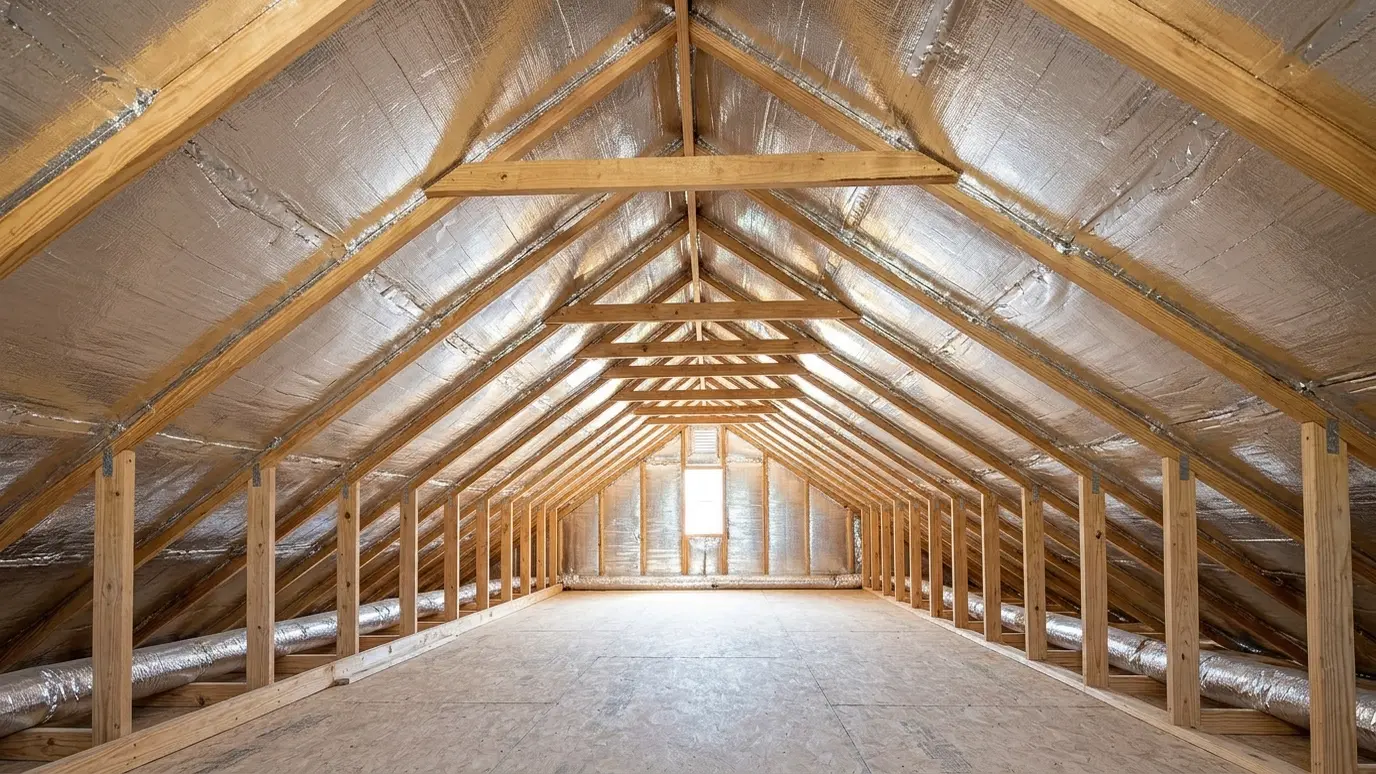 Radiant Barrier InstallationA reflective foil layer under the roof deck that turns back summer radiant heat before it reaches your…Explore
Tell us about the project and we will call you back to talk it through.
Or call (615) 357-7797 to talk now.