Why crawl spaces struggle here
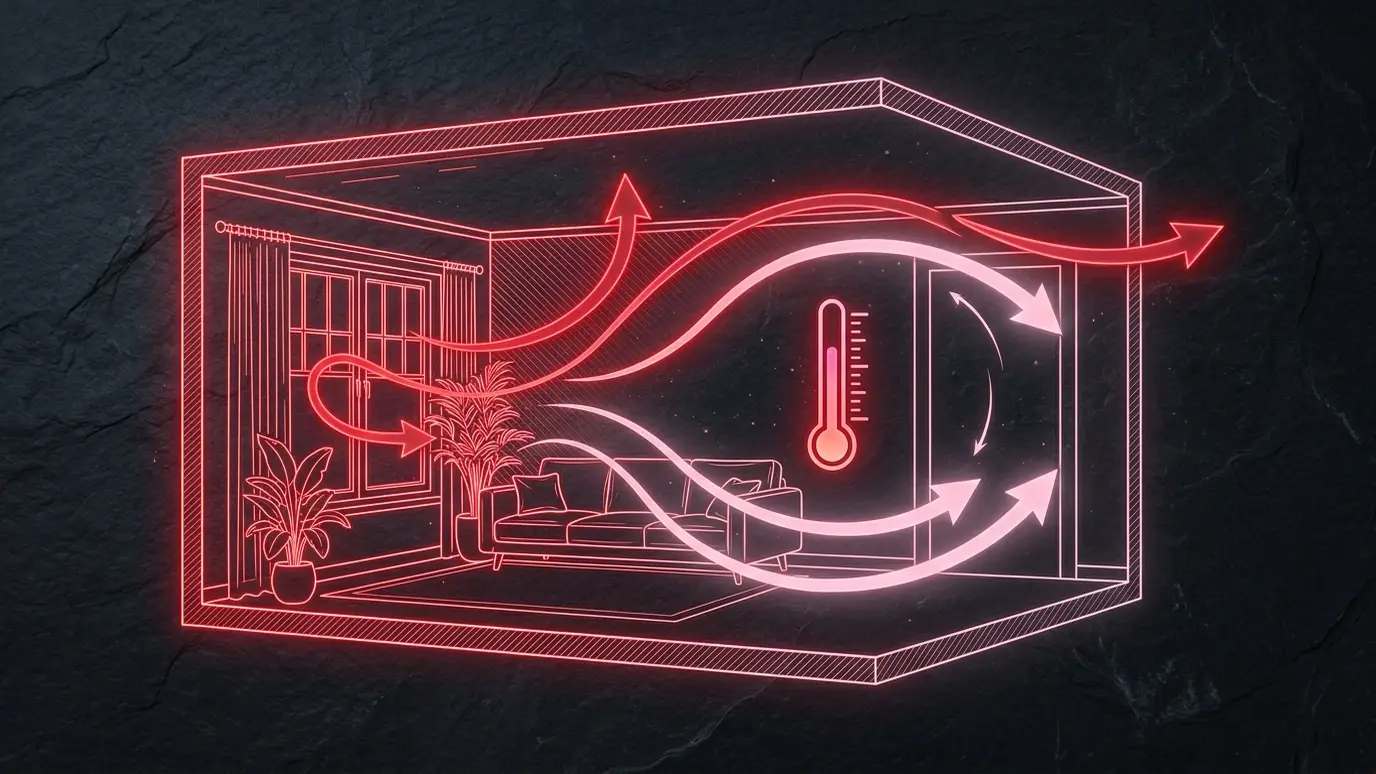
Warm, humid summer air meets cool surfaces under the house and condenses. Wood absorbs the moisture, mold can grow and the air rises into the living space.
Vents let more humid air in than they let out for much of the year.
Start with water
Gutters, grading, downspouts and drainage come first. A vapor barrier cannot stop liquid water, and insulation cannot fix a leak.
If water stands in the space, plan for a drain or pump.
The vapor barrier
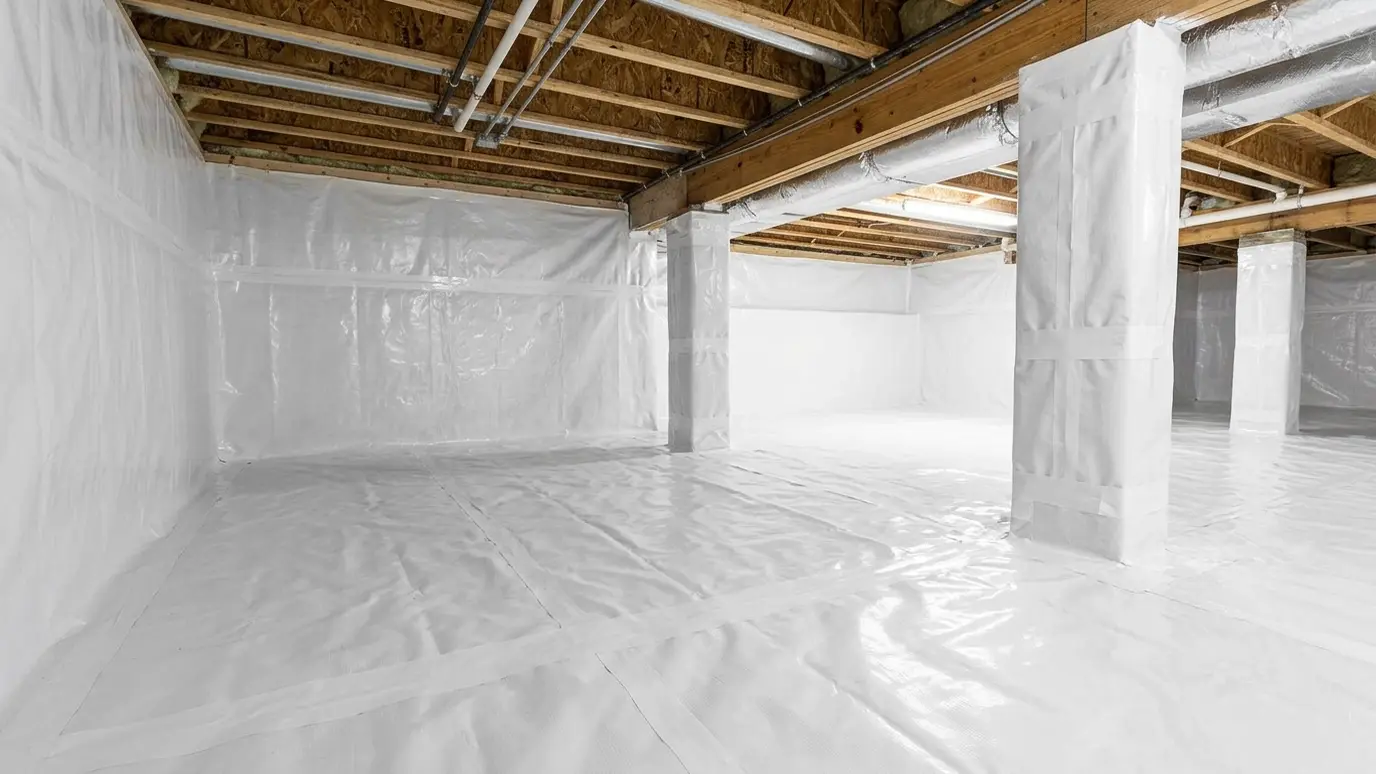
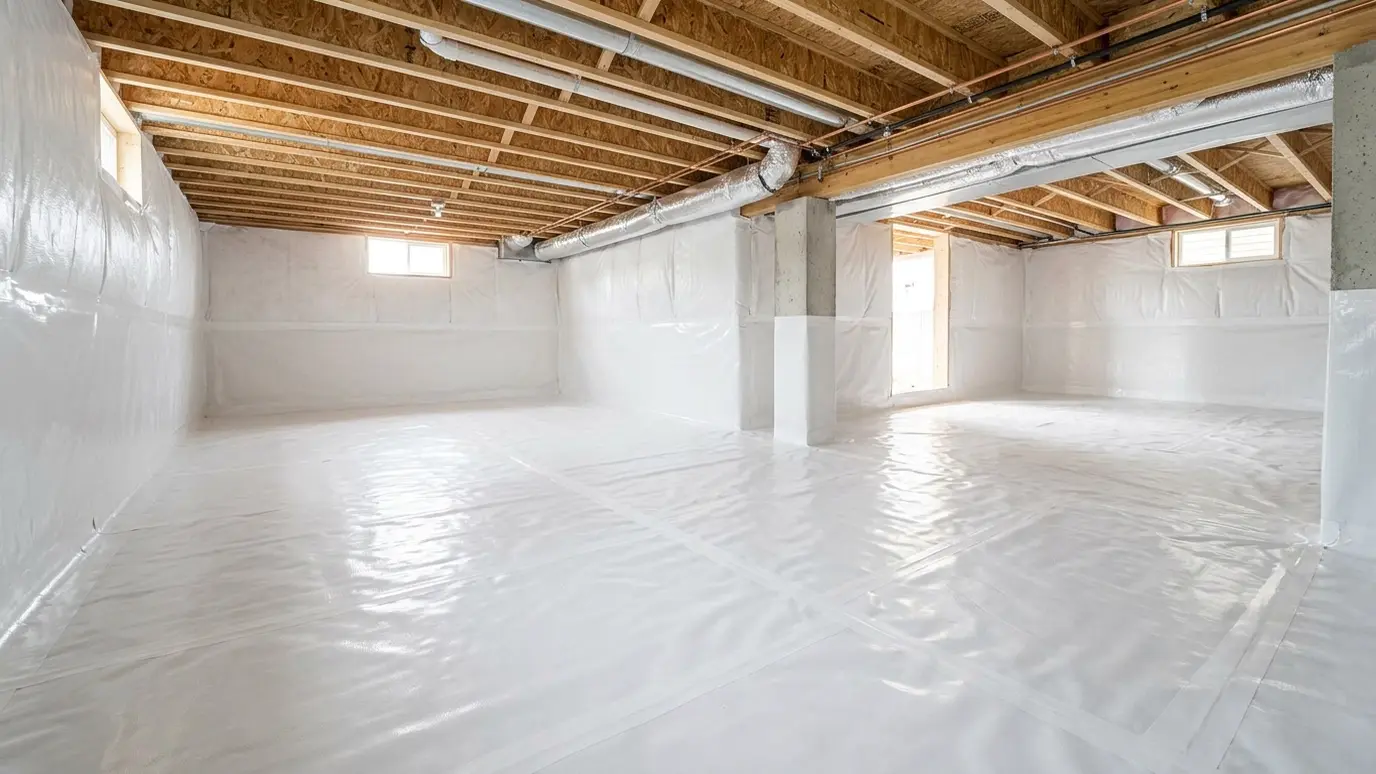
A heavy, reinforced liner covers the floor and runs up the walls, with overlapped and taped seams and sealed edges. It stops ground moisture from rising.
Thin sheets tear and leave open seams.
Where the insulation goes
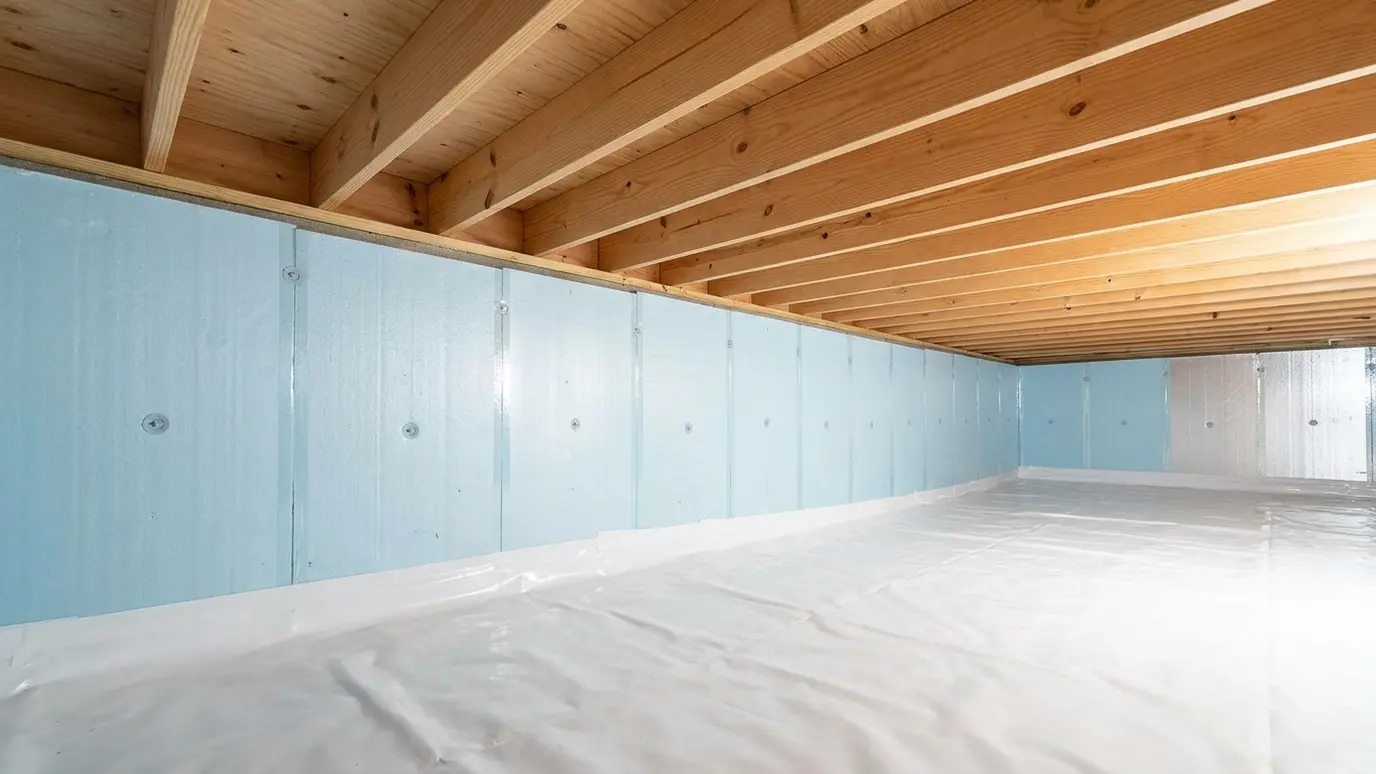
In a sealed crawl space, insulate the walls. In a vented one, insulate under the floor with an air barrier on the underside.
Mixing the two can trap moisture.
Control the humidity
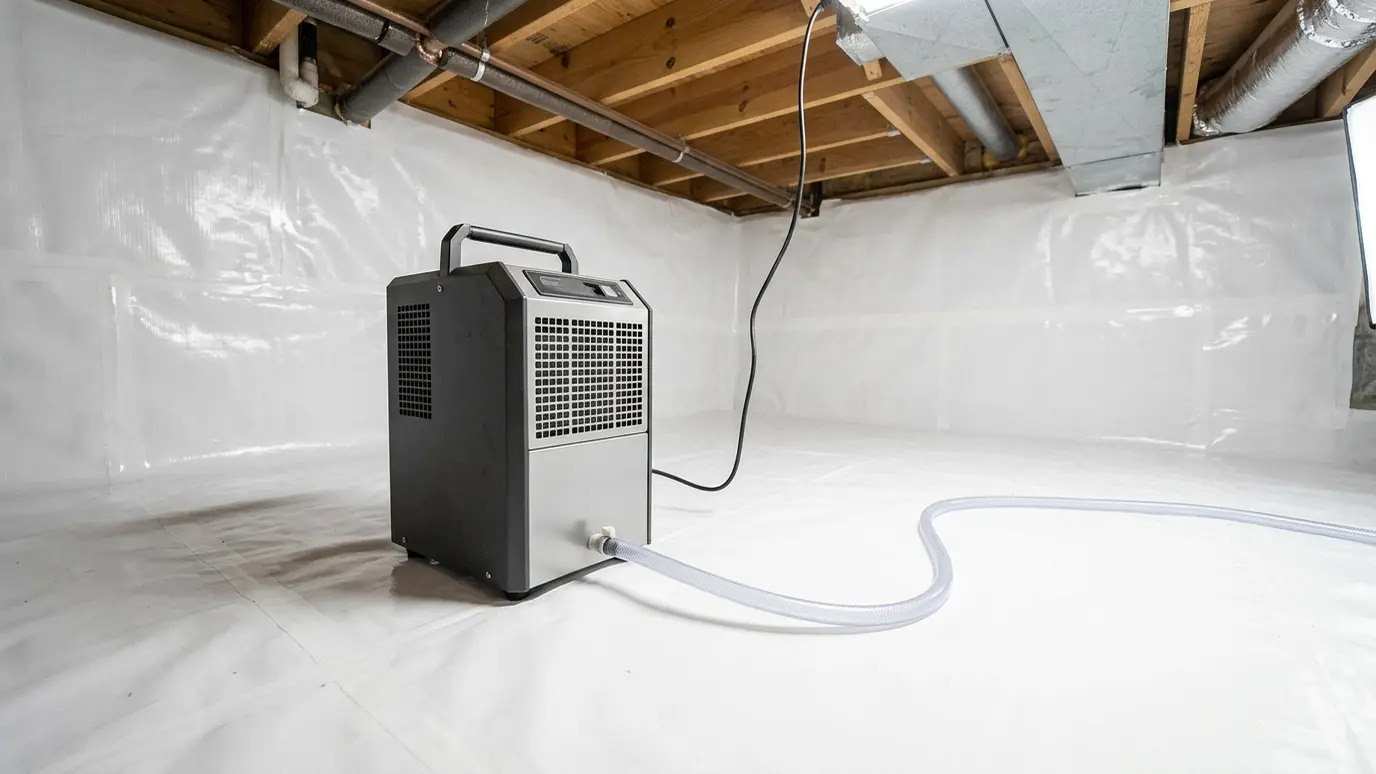
A dehumidifier sized for the space holds humidity in a safe range. A monitor shows the number so you can see it working.
Dry air protects wood, insulation and ducts.
Pests, mold and professional help
Existing mold and wood rot need attention before sealing. A pest professional should handle termites and rodents.
We flag what we see and refer you to the right trade.
Fix the water, seal the ground, insulate in the right place and control the humidity, in that order.