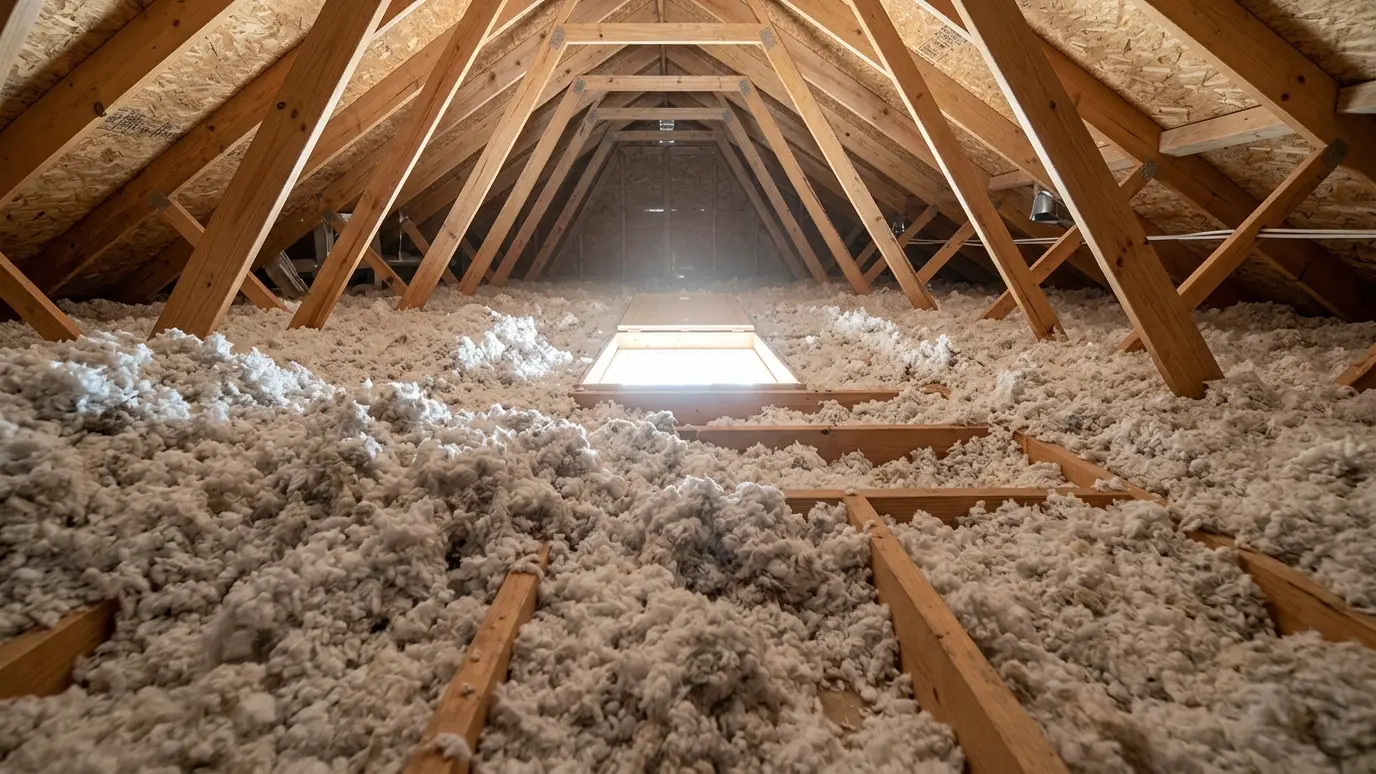
A deep, even blanket of loose-fill insulation over your ceiling, installed to a measured depth so every room below stays steadier.
The attic is the single largest opportunity in most homes. Heat rises in winter and pours in through the roof in summer, and a thin or patchy layer of insulation lets both happen. Blown-in insulation fills around joists, wiring and framing in a way that rolls of batts cannot, which leaves far fewer gaps.
We start by looking at what is already up there, checking for moisture, stains and rodent signs, and sealing the air leaks that sit beneath the old material. Then we blow loose-fill fiberglass or cellulose to the depth that matches your target R-value, place depth markers so you can see the result, and keep baffles clear so the roof can breathe.
R-value comes from thickness. Each type of loose-fill has a published coverage chart, and we blow to the depth that chart calls for, then place rulers in the attic so you can check it yourself on any day.
Insulation slows heat but does not stop moving air. We seal the gaps around wiring, plumbing, top plates and light fixtures before the insulation goes down, because that is what lets the new layer perform as designed.
Baffles keep insulation from blocking the soffit vents, and proper barriers keep it a safe distance from flues and certain light fixtures. A clean, careful finish matters as much as the material.
Loose-fill settles a little in the first year or two, so we blow slightly above the target to allow for it. After that it holds its form for decades when the attic stays dry.
Drag the handle to compare.
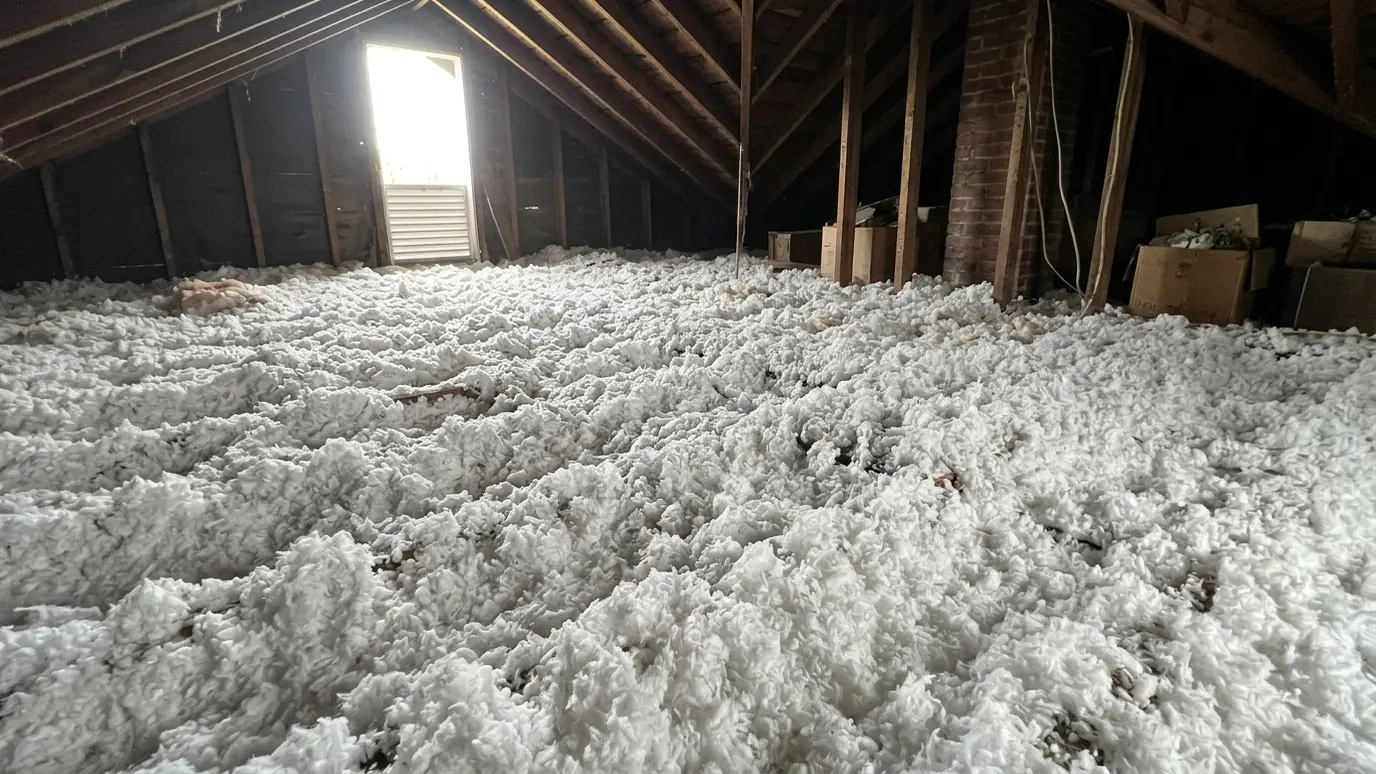
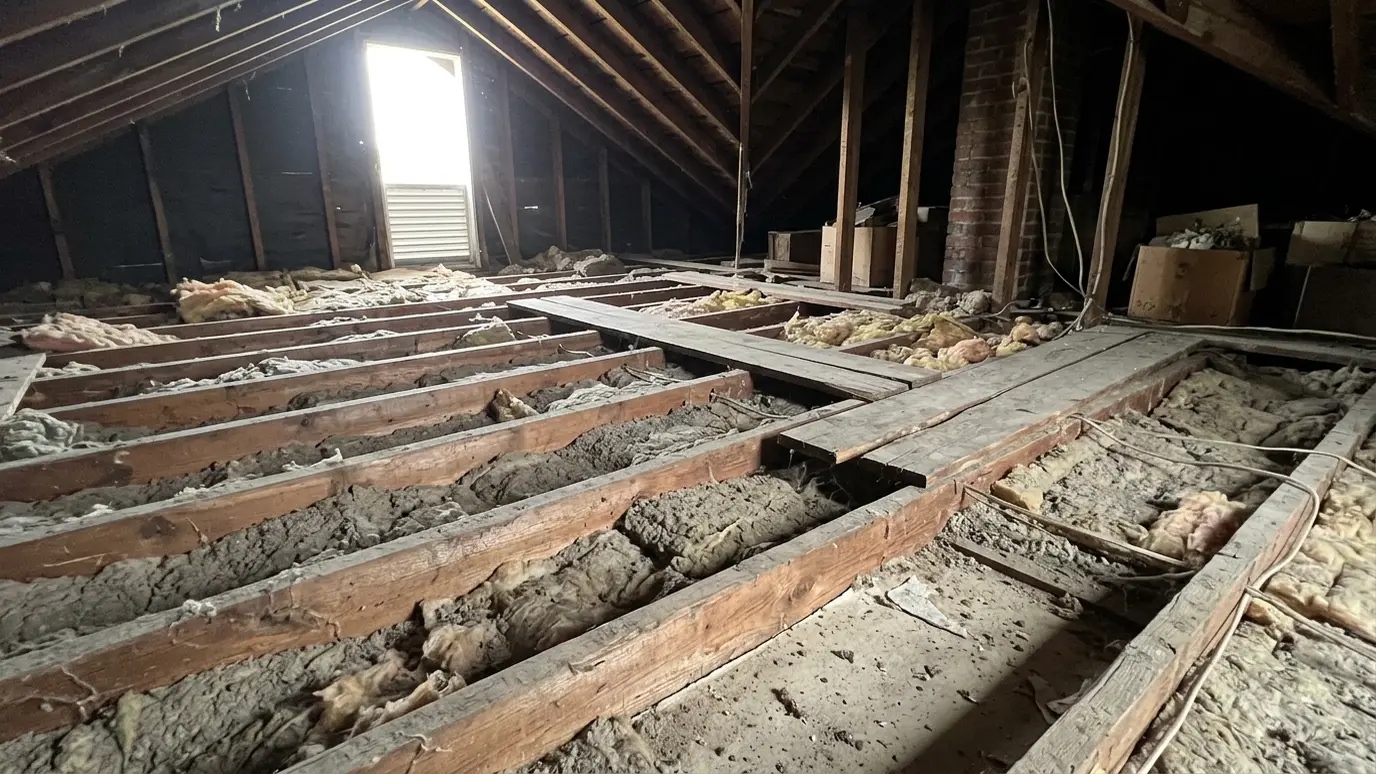 BeforeAfter
Installed to the depth that matches your target R-value.
Leaks closed before insulation goes down.
Fills around joists, wiring and framing without gaps.
Baffles protect soffit airflow.
Rulers placed so you can verify the result.
Hatch, walkways and work area left tidy.
Every topic has its own page with what to expect and how we approach it.
 Project situationHot and Cold RoomsOne room is always too warm and another is always too cold. Here is why it happens and…Learn more
 Project situationHigh Energy BillsWhen bills climb and the house still does not feel right, the building is often the reason. Here…Learn more
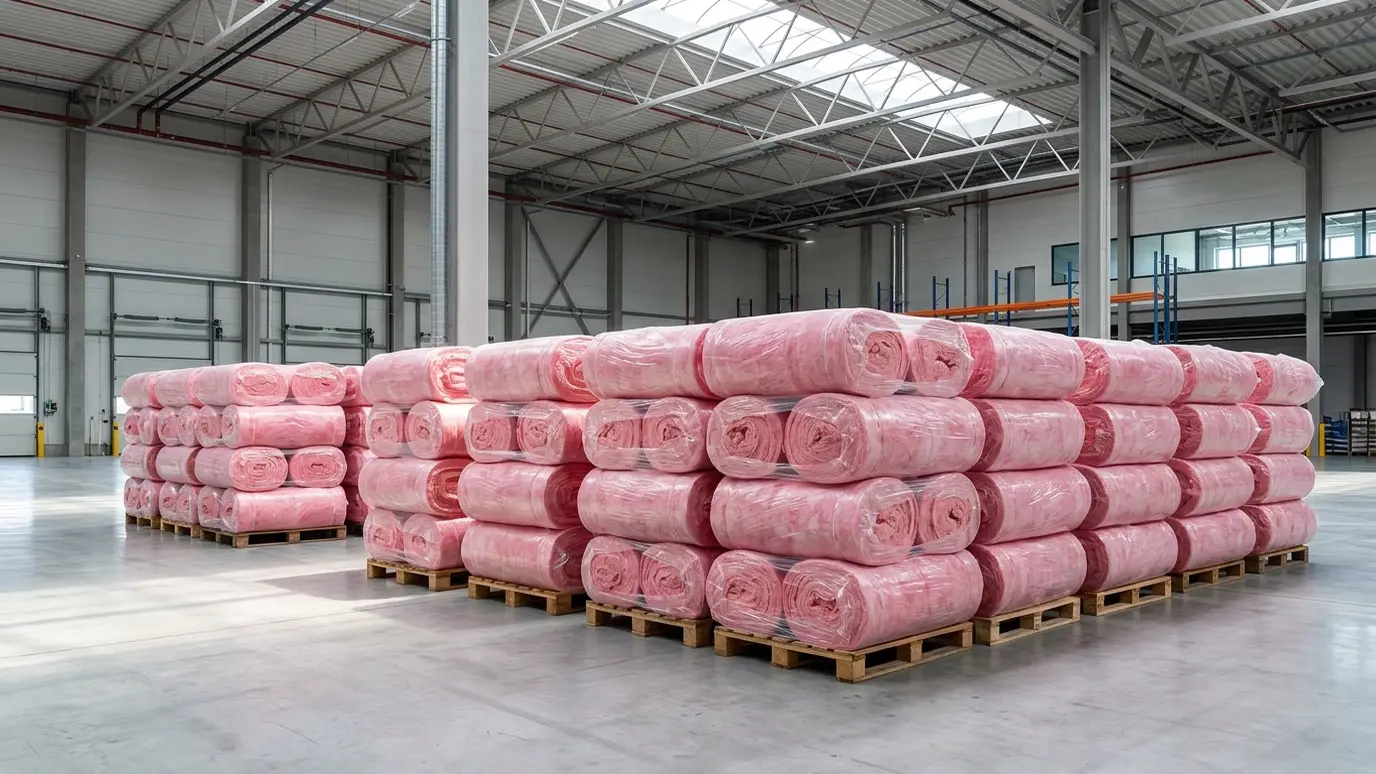 Material guideFiberglassThe most common insulation, in batts and loose-fill. Here is how it performs, where it works well and…Learn more
Enter the attic size, the material and the depth you have now to see how much to add to reach your target.
You tell us what is going on, which rooms bother you and what you hope to change, and we set a time that fits your day.
We walk the attic, walls, crawl space and equipment, measure depths and use thermal imaging when it helps.
We protect the house, seal air leaks, place baffles and fix small problems so the insulation can do its job.
Loose-fill, batts, foam or board goes in to the planned depth, with clean edges and clear markers.
We measure the result, take photos and test air leakage when the scope includes it.
We walk the finished work with you, answer questions and leave the site clean.
Both work well when installed to depth. Fiberglass is lightweight and does not hold water; cellulose is dense and resists air movement a little better. We explain the tradeoffs for your attic.
Often yes, if the old material is dry and clean. If it is wet, compacted, contaminated or full of rodent waste, removal is the better path.
Most homes take a single day, with air sealing adding some time first. Larger or more complex attics can take longer.
The blowing machine stays outside and the hose runs to the attic, so the living space stays clean. We protect floors on the path to the hatch.
We place depth rulers and measure with you. You can check them any time, and the coverage chart for the material is available on request.
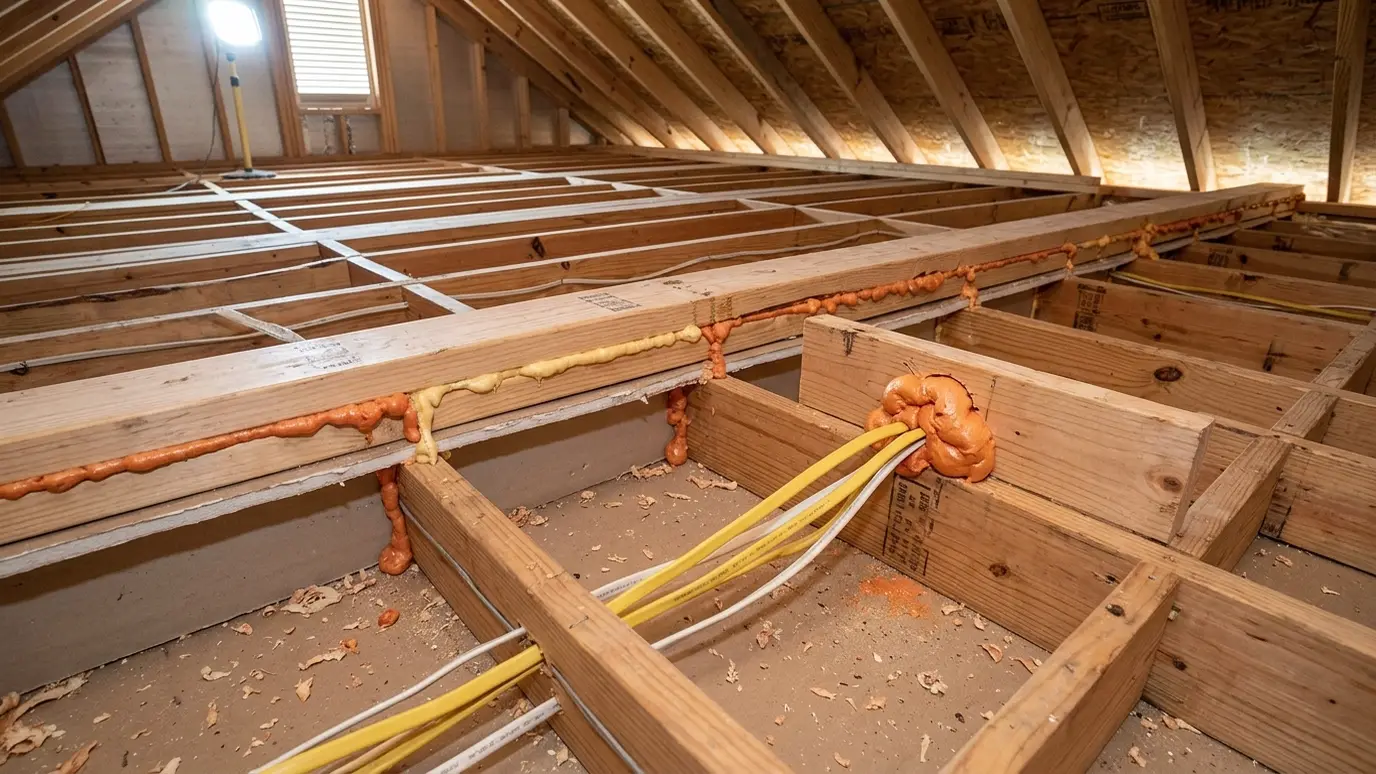 Attic Air SealingThe hidden leaks between your living space and the attic, found and sealed so conditioned air stays inside.Explore
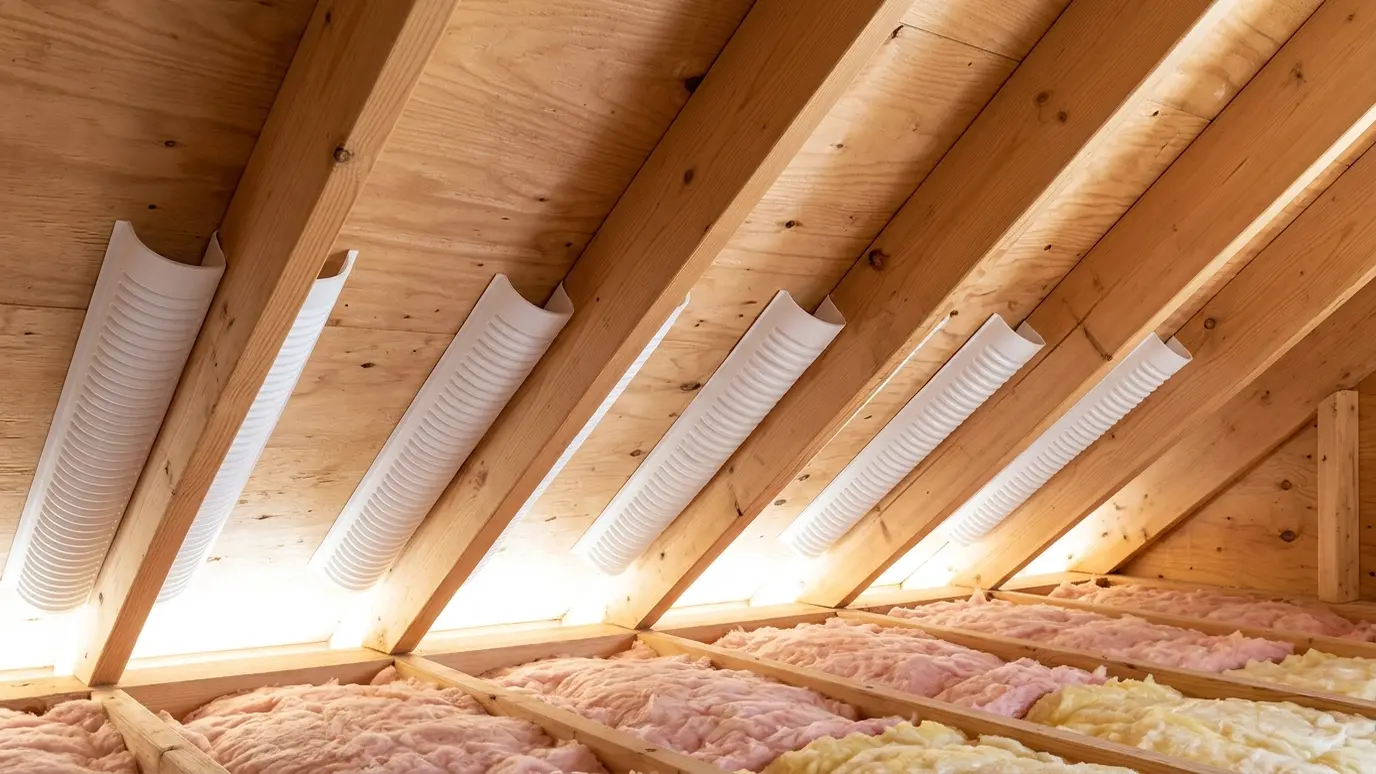 Attic Ventilation and BafflesBalanced airflow from the eaves to the ridge, so the roof deck stays dry and cooler and your…Explore
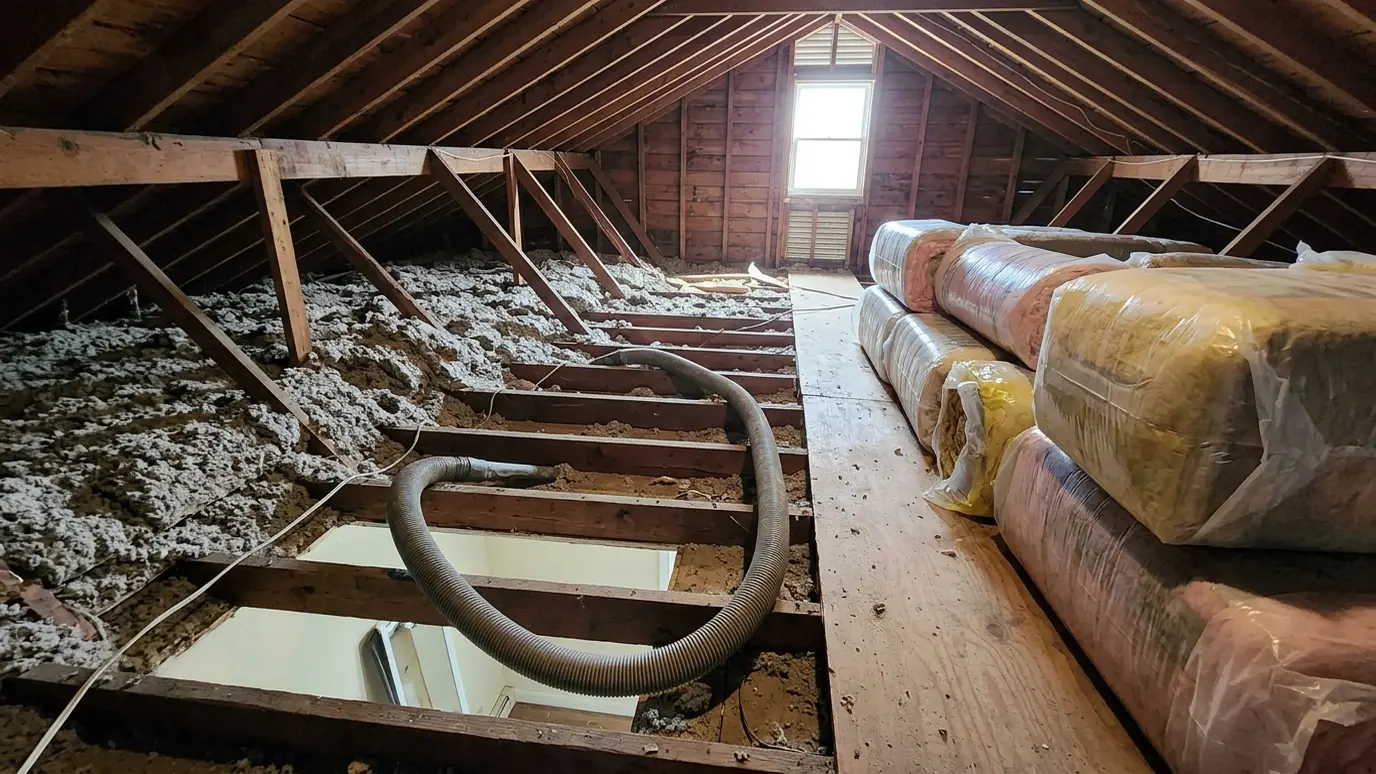 Attic Removal and ReplacementOld, wet, matted or contaminated insulation removed by vacuum and replaced with a clean, correctly sized layer.Explore
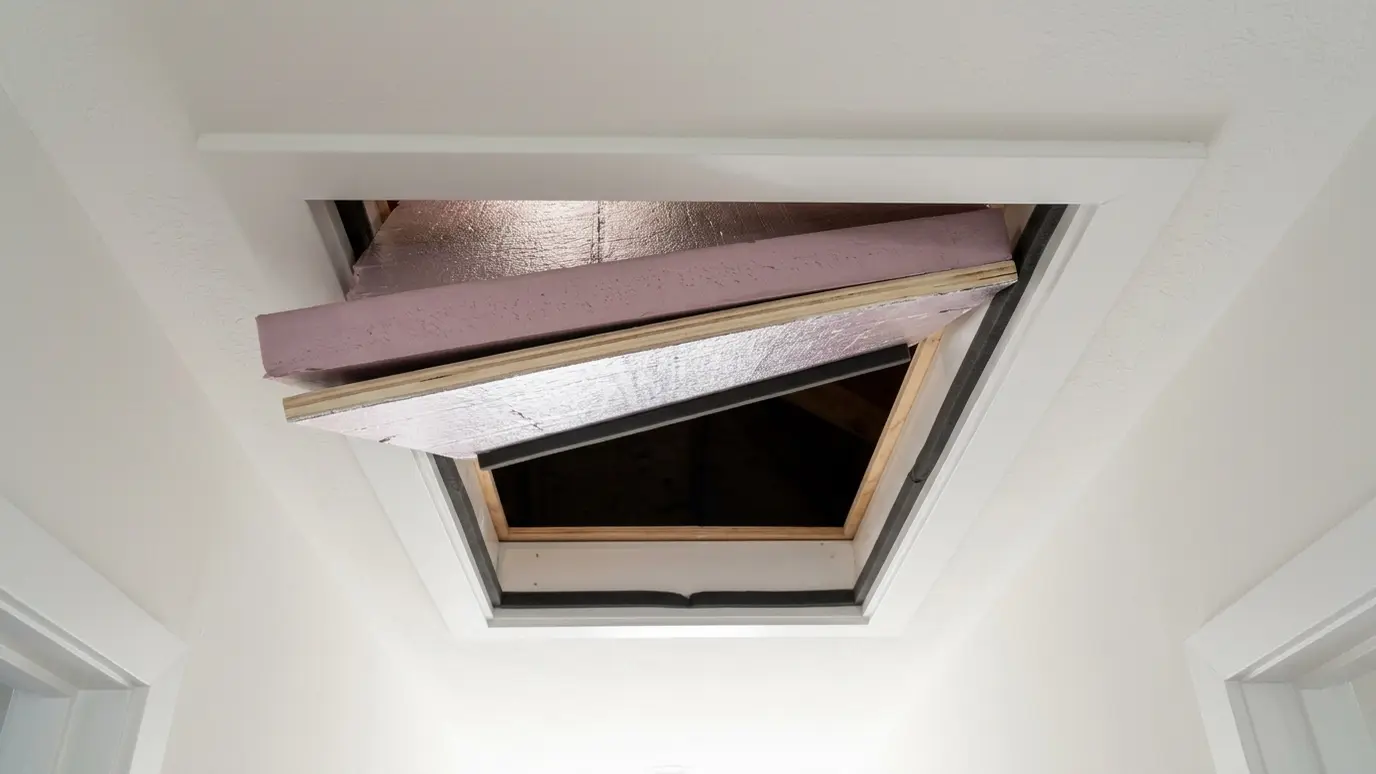 Attic Hatch and StairsThe leaky hole in your ceiling, sealed and insulated with a gasketed cover so your attic work actually…Explore
Tell us about the project and we will call you back to talk it through.
Or call (615) 357-7797 to talk now.